

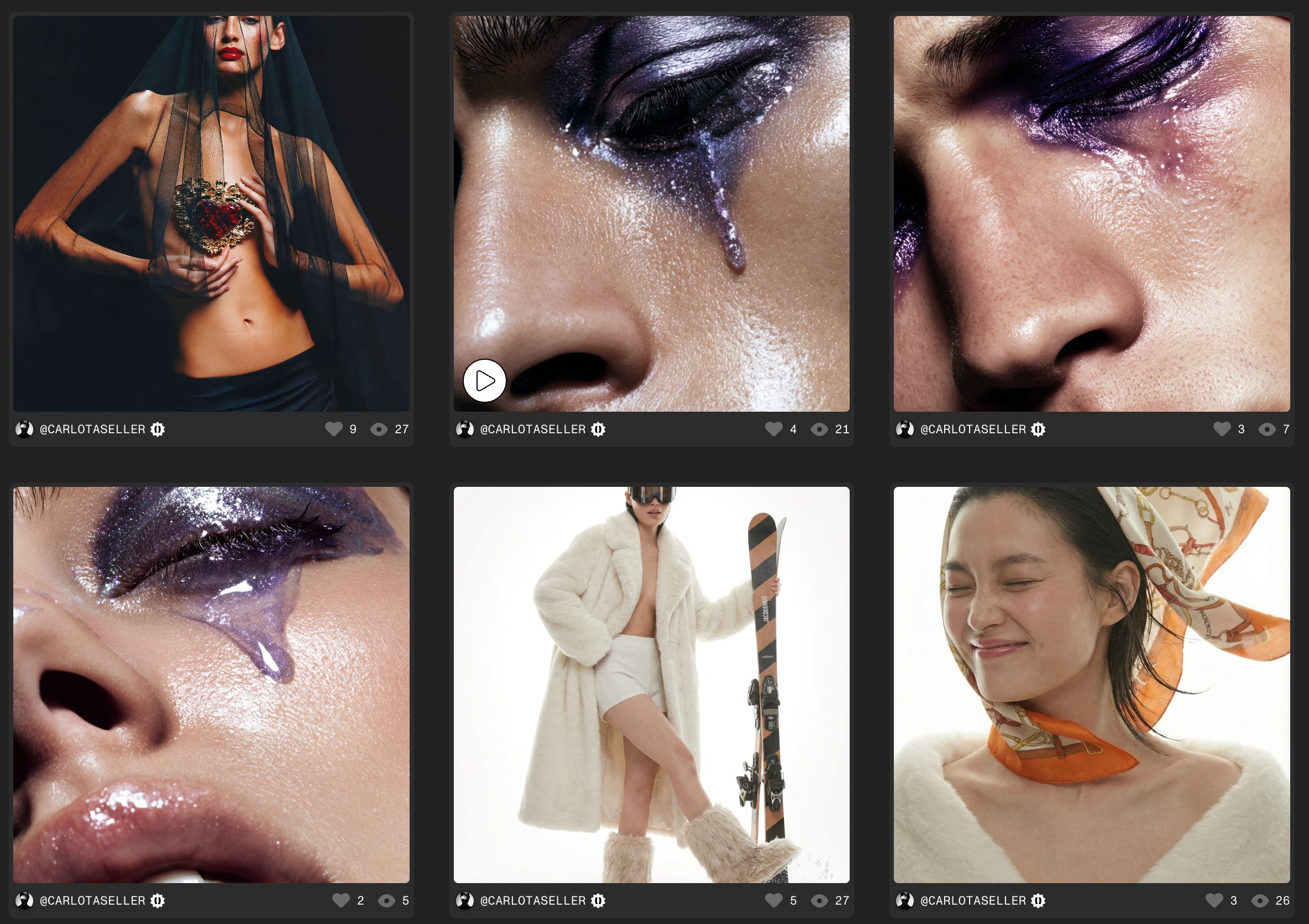
Carlota’s connection to MITO started in June 2025, through research. She was preparing a class on AI applied to fashion for a master’s in communication, marketing, and luxury fashion. She was looking for examples that treated AI as a serious audiovisual language, not as novelty.
That search led her to MITO’s piece for Lagaam. What caught her attention was not only realism. It was structure. Real garments translated into a coherent spot, with narrative continuity and visual discipline. She used it as a case study. Then she stayed close.
A few months later, Danny reached out to show her an early version of MITO’s video tool. She tested it and recognized something that rarely appears in the AI fashion space: a system designed from filmmaking logic. It did not behave like an experimental playground. It behaved like a production environment.
Soon after, MITO Universe launched. For Carlota, the premise landed instantly. A platform where AI generated work could be shared in a curated, professional context, with the community layer built into discovery. She joined from the beginning, because the space felt aligned with the direction she wanted the field to take.
L’APPAREL BY CARLOTA SELLER
A fashion film for Repetto, built inside MITO AI
Some fashion films sell a product. Others protect an atmosphere.
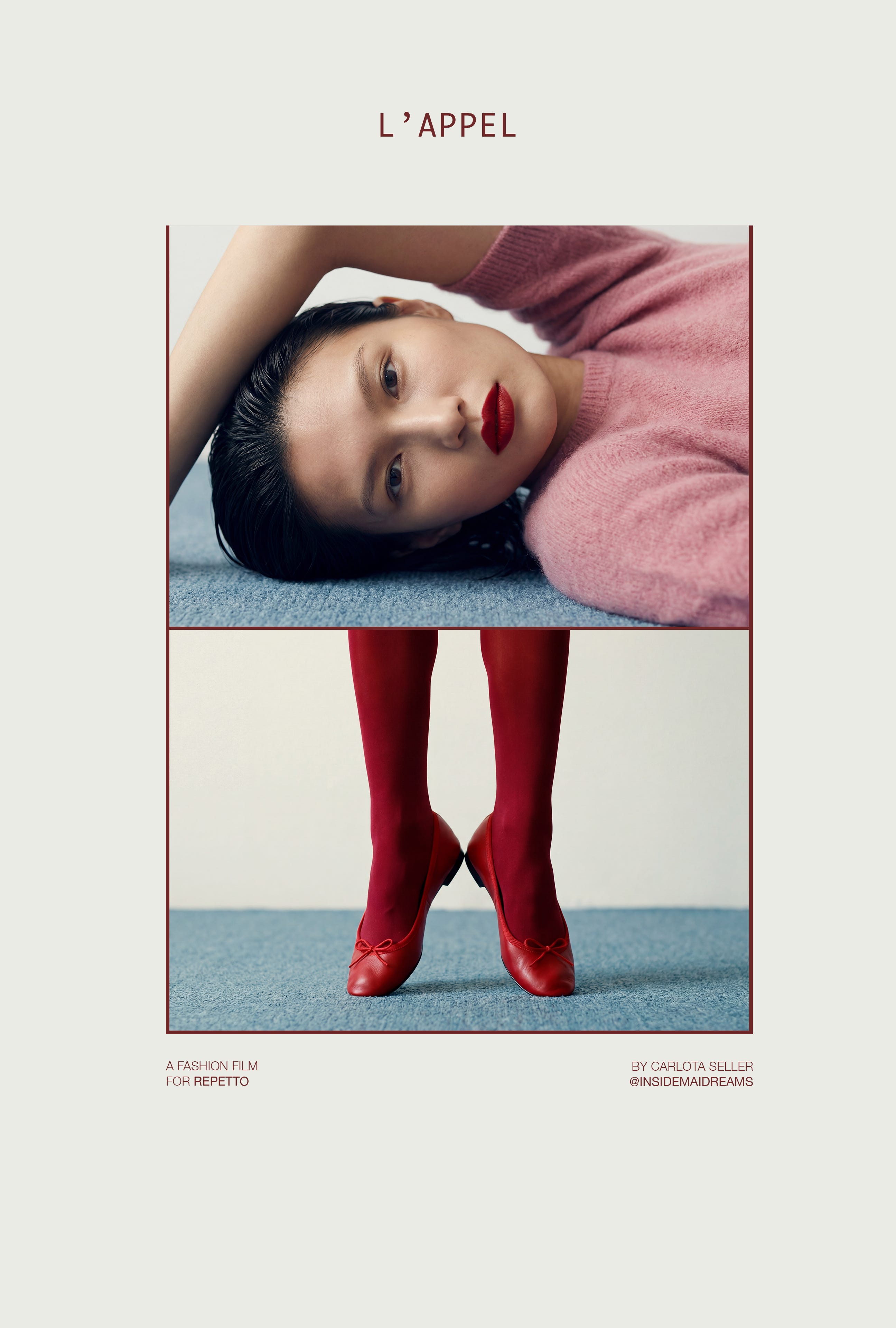
Carlota Seller’s L’Appel belongs to the second lineage. A minimal set, a disciplined palette, a body held in restraint. Pink knit against red tights. Red lipstick as punctuation. A red telephone that reads like a narrative device rather than a prop. The film never over explains itself. It composes.
This is the kind of work that becomes legible through process by carrying intention.
FROM BRAND RESEARCH TO A CONCEPTUAL FASHION FILM
Carlota begins the same way she would in any traditional project. She studies the brand deeply, its history, its codes, its imaginary. With Repetto, the cultural anchor is clear. The brand is inseparable from dance, from footwear designed for the body in motion. Over time, that heritage leaves the stage and enters the everyday. The ballet flat becomes an icon that carries both function and mythology.
From that foundation, she developed a conceptual fashion film, not commercial, as an exercise in creative direction. The subject is the relationship between product, body, and movement, using AI as a tool inside a complete audiovisual workflow.
This is where her process becomes the point.


She does not start by generating random stills and hoping a story emerges. She starts by defining a world that can hold a story, then she builds images that already behave like shots.
THE SET IS THE NARRATIVE
L’Appel is built on a controlled emptiness. A pale wall, a blue carpet, a chair that frames the body like a sculptural constraint. The styling becomes a single sentence in two colors. Pink and red. Softness and insistence.
The objects are chosen with the same seriousness as casting, none of them are decorative. They function as narrative operators. They tell the viewer how to read the scene. They locate the work inside a lineage of fashion imagery where gesture, composition, and silence do the heavy lifting.
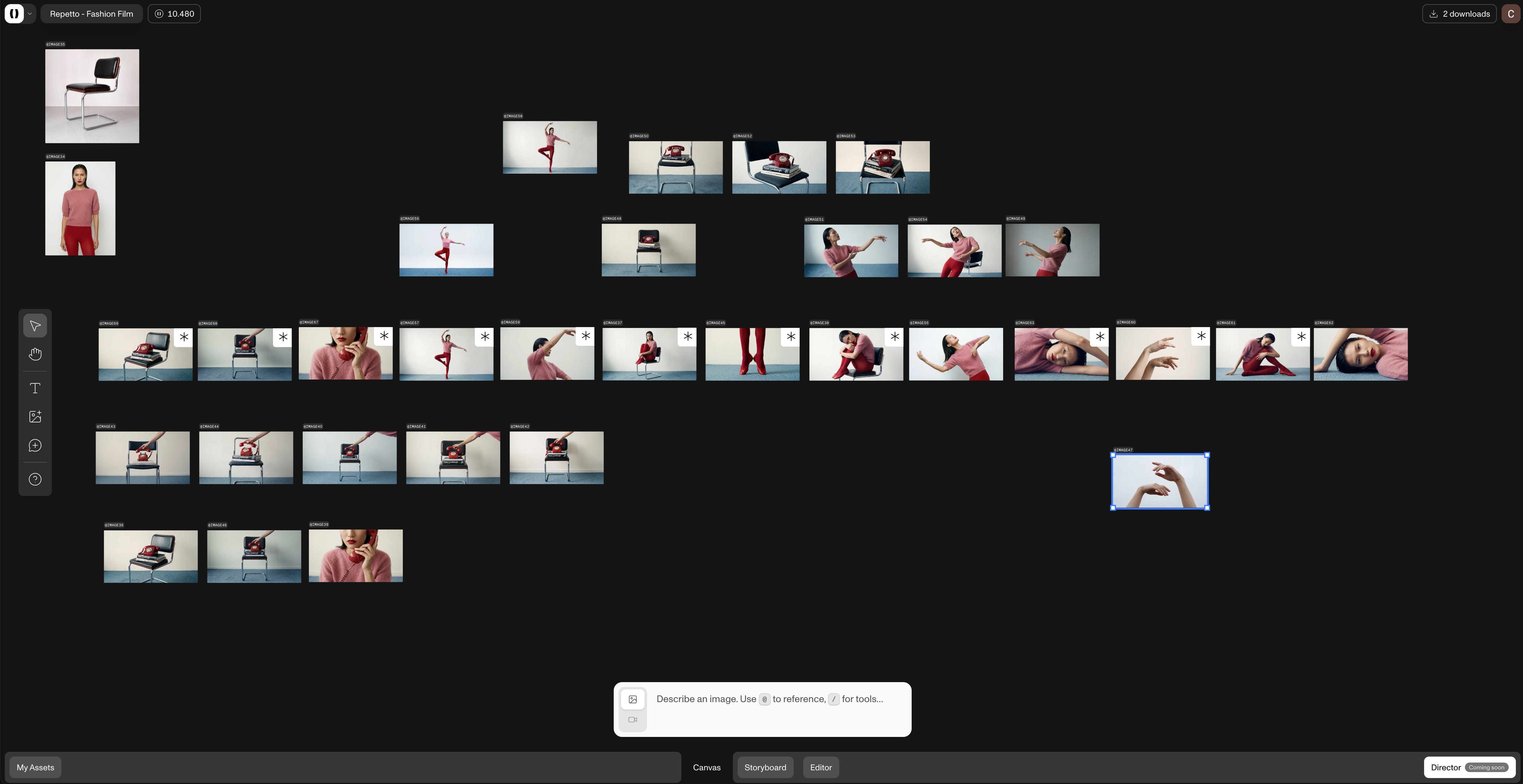
ALWAYS THINKING IN MOTION
Carlota’s method is strict about one thing: every still is generated with video in mind.
That changes the entire relationship with the frame. The image stops being a final artifact. It becomes a unit in a sequence. Lens choice, framing, shot type, and lighting are decided like production decisions, because they are.
This is one of the reasons MITO fits her workflow. The tool allows her to define parameters that feel native to cinema language, and that control is what makes coherence possible across multiple shots.
STORYBOARD AS THE HINGE
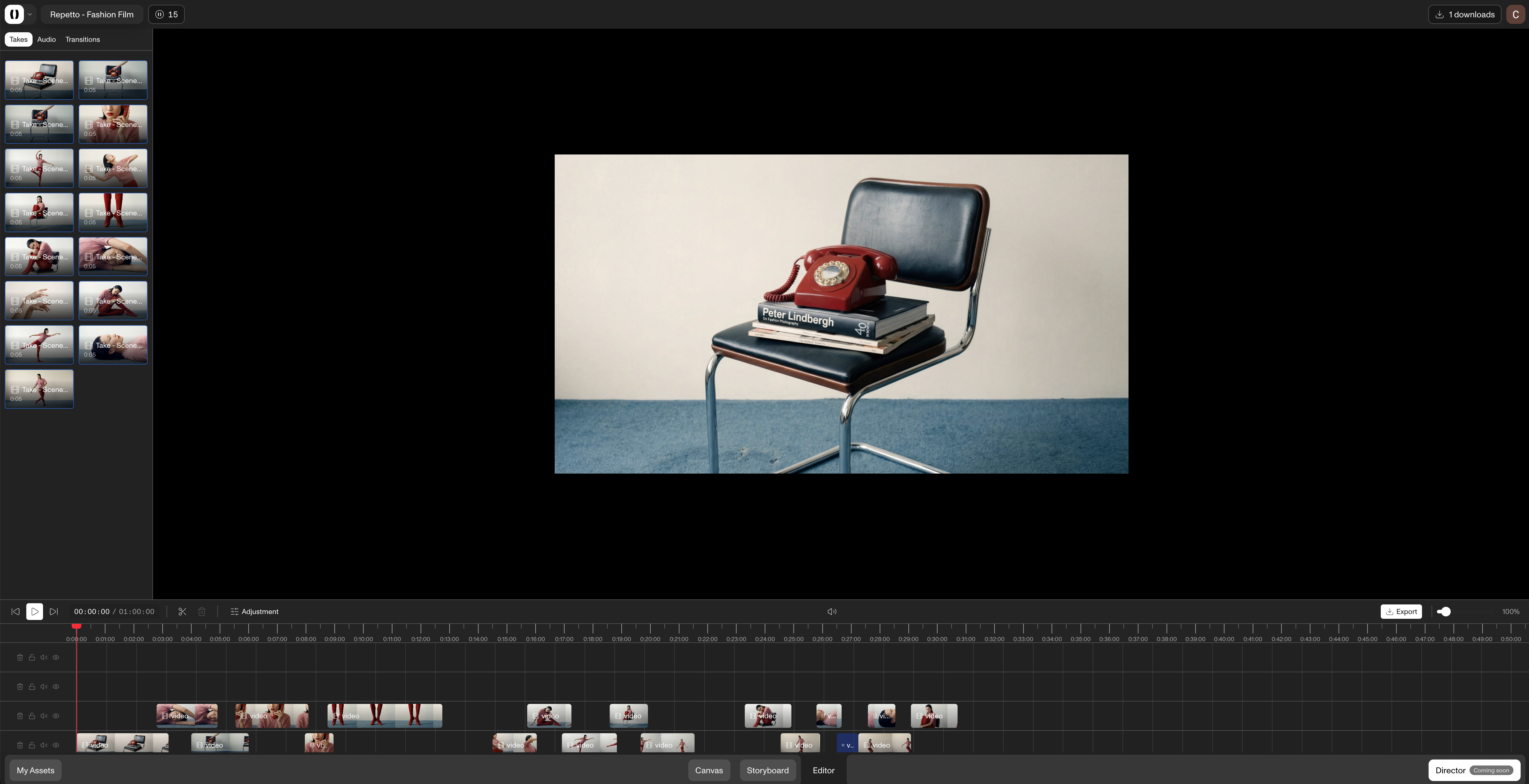
In Carlota’s case, the storyboard is where the piece becomes a film.
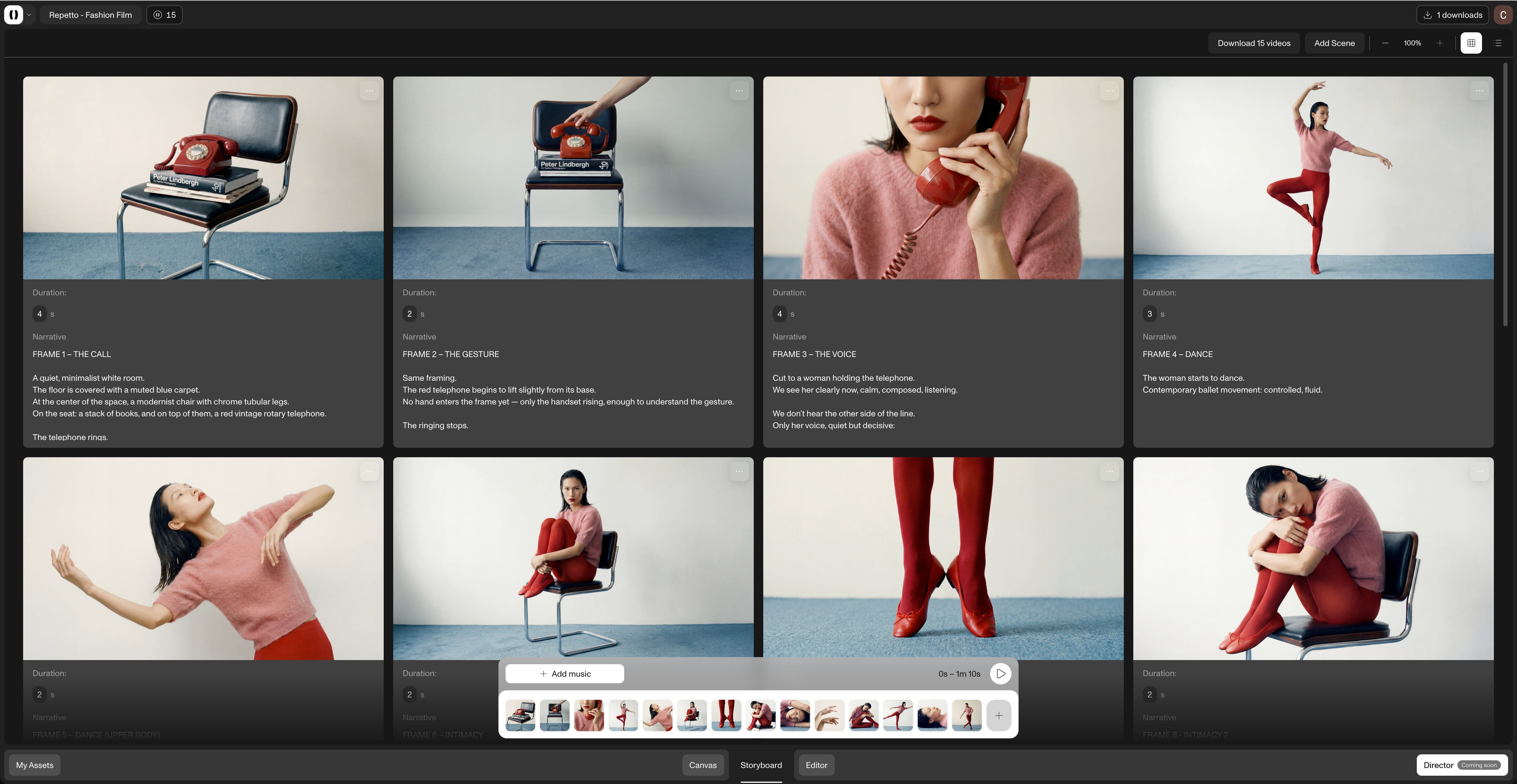
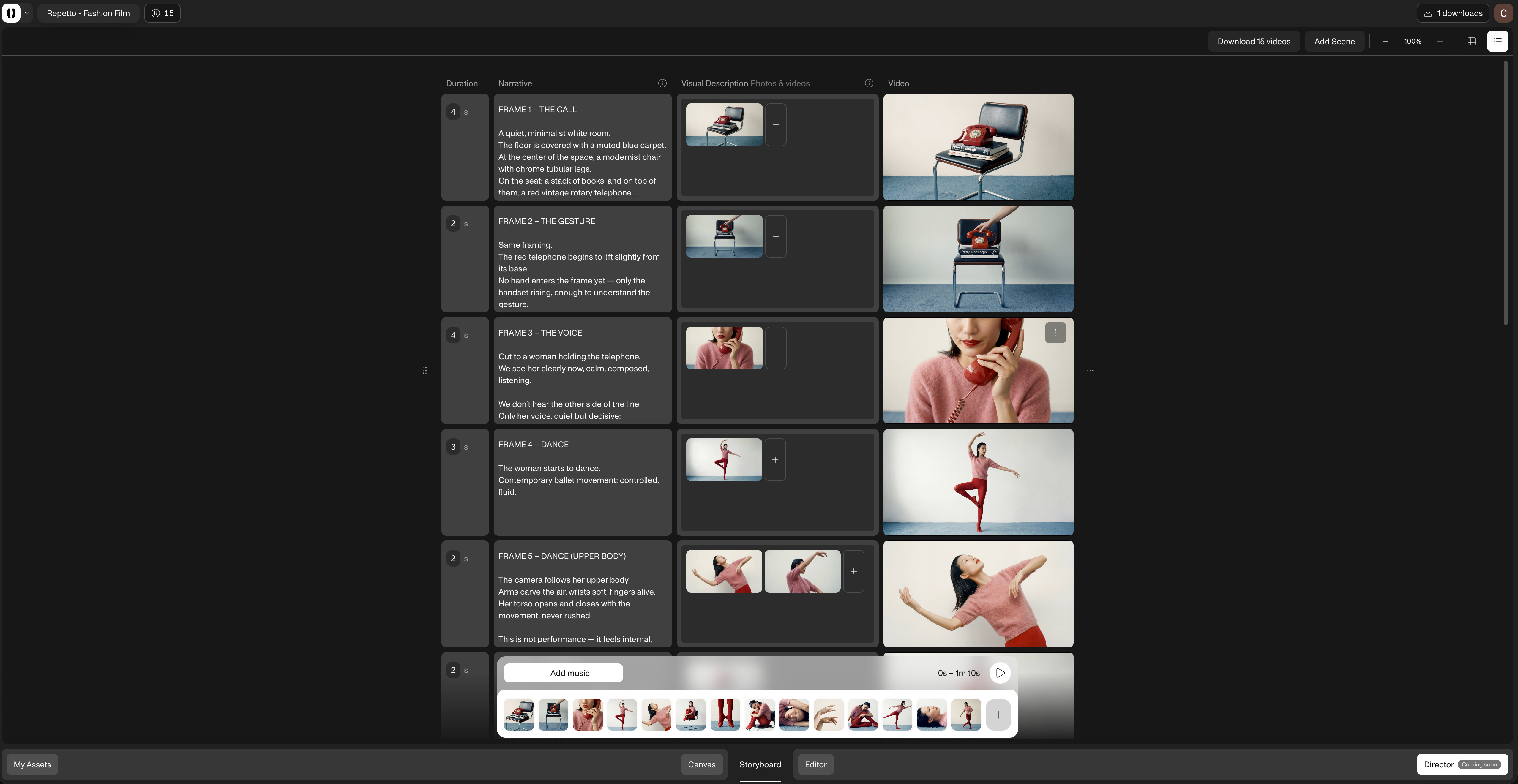
She values MITO’s storyboard system because it forces narrative thinking: scene order, duration, rhythm, and transitions. It is the difference between animating images and building a story.
She starts generating video from frames that were designed to move. Then she adjusts pacing and transitions until movement carries meaning rather than decoration.
EDITING INSIDE THE SAME ENVIRONMENT
The last step is the one most AI workflows still struggle to treat as integral: edit.
Carlota finishes inside MITO. Concept, stills, storyboard, motion, final assembly. A single environment that keeps narrative continuity intact and removes the typical friction of jumping between tools.
That continuity changes how she thinks about AI video. She no longer starts from still images and adds motion later. She conceives the project as audiovisual from day one, with rhythm, narrative, and its own language.
Fashion is one of the fields most exposed to AI’s tendency toward sameness. When generation becomes effortless, the culture fills with images that resemble each other because they share the same shortcuts.
L’Appel demonstrates authorship that uses AI as infrastructure, not as aesthetic. A film built from concept, constraints, production thinking, and editorial control.
That is the shift MITO exists to enable.
Check Carlota’s profile on MITO Universe here.