
THE CURATED LOG XXIX
By MITO Universe - @mito.universe

Welcome back to MITO Universe.
This week’s edition unfolds at a moment when the infrastructure beneath image-making is visibly shifting. A potential consolidation of visual memory into a single intelligence, software dissolving into conversational intent, and a growing resistance to extractive subscription models all signal the same pressure point: who controls creation, and under what conditions.
Against this backdrop, the artists featured here operate at thresholds; between human intention and machine emergence, between ownership and negotiation, between history and speculation. Their practices don’t react to these changes; they already inhabit them. What follows is not commentary on tools, but evidence of how contemporary authorship adapts when systems, economies, and imaginaries are quietly reconfigured.
SELECTED CREATORS
The MITO Universe is shaped by the artists who actively inhabit it. Each week, we spotlight one of these perspectives: creators using AI with intention, clarity, and authorship.
If you’re building worlds, refining a personal visual language, or engaging critically with the future of image-making, this is your space. Join the community, create your MITO Universe account, and take part in the dialogue.
MITO UNIVERSE CREATIVE SPOTLIGHT: Crédito | @credito
Crédito, based in Spain, constructs visual territories where the algorithmic unconscious reveals itself through chromatic intensity and compositional rupture. Working within the paradoxical space of AI-generated imagery, these works occupy the threshold between human intentionality and machinic autonomy; a zone where authorship dissolves into collaborative emergence.
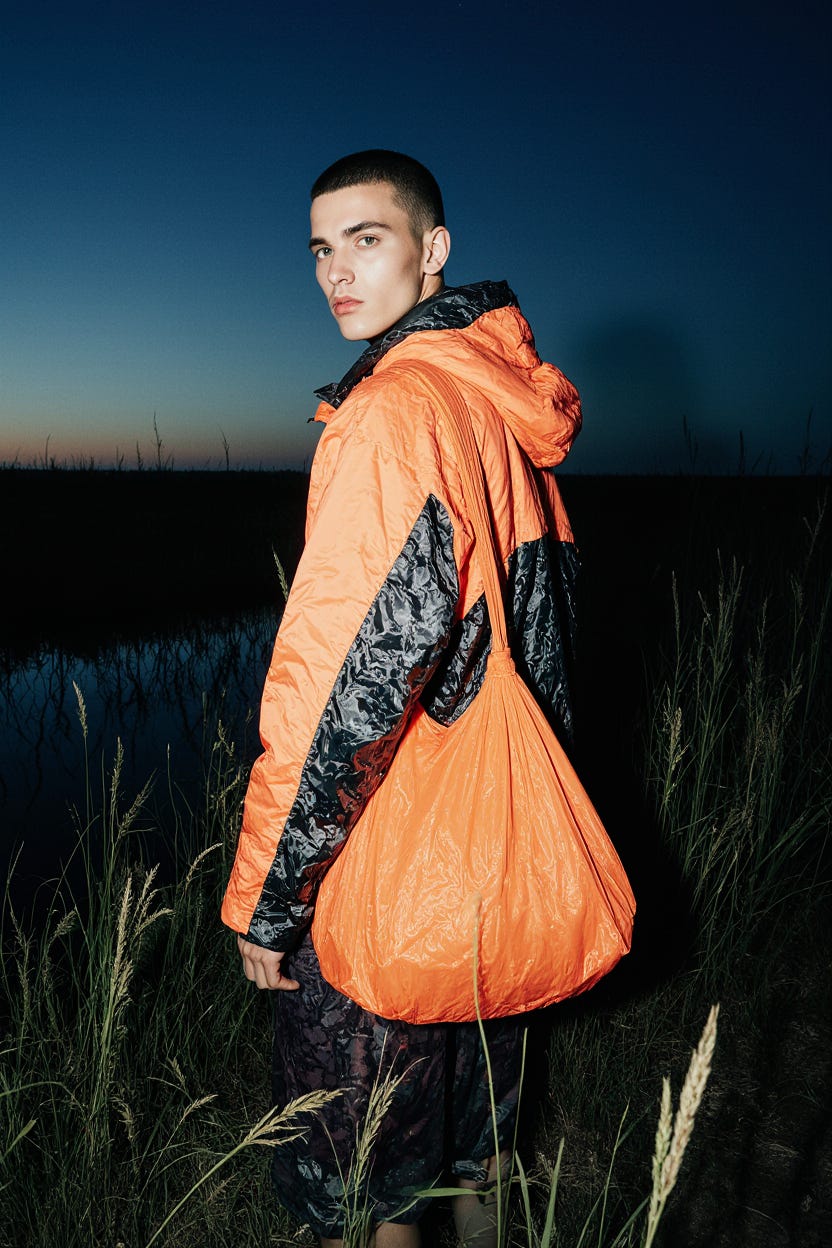
The images present a taxonomy of contemporary subjectivity: the figure isolated against twilight landscapes, faces transformed by light-projected geometries, bodies situated within architectures both natural and constructed. There’s a persistent attention to liminality; dawn and dusk, mountain peaks and oceanic horizons, interior and exterior spaces; suggesting an investigation into transitions rather than states. The aesthetic vocabulary draws from fashion photography, conceptual portraiture, and surrealist staging, yet the AI’s interpretation introduces subtle distortions that mark these as products of generative logic.


What distinguishes Crédito’s practice is this deliberate positioning at the generative threshold. As “Generative Lead,” the designation itself remains productively ambiguous: technical director, aesthetic coordinator, or perhaps something more; a mediator between human vision and algorithmic possibility. The work doesn’t conceal its AI origins but rather foregrounds the collaborative dynamic, exploring how contemporary image-making has become inseparable from computational processes.
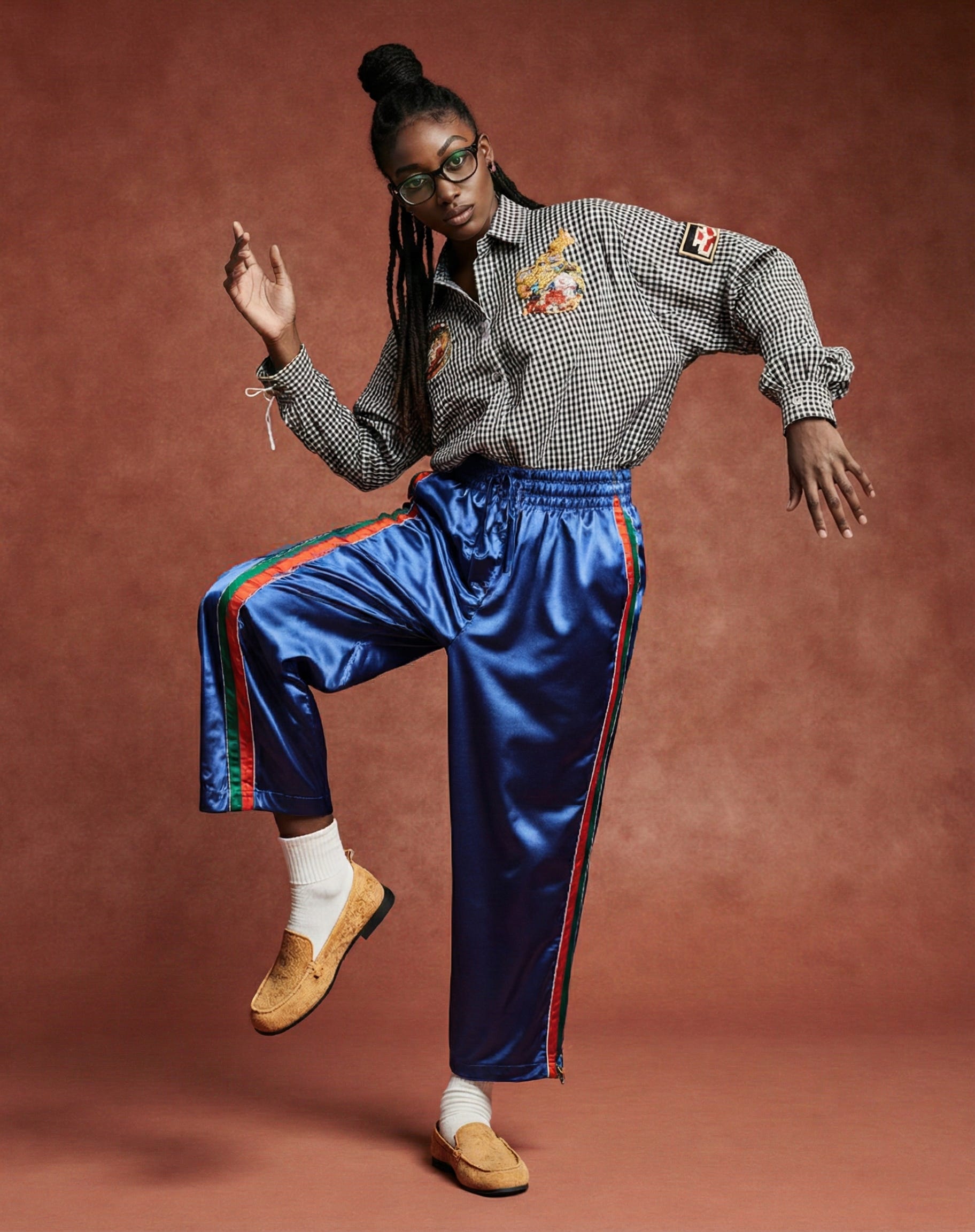
These are images that ask: what does it mean to lead generation itself? To guide without fully controlling, to author without singular intentionality?
Marcus Wallinder | @meanwhileinnowhere
Marcus Wallinder’s practice, conducted under the moniker “Meanwhile In Nowhere”, occupies a crucial threshold in contemporary image-making: the interface between human intentionality and algorithmic generation. Working primarily in monochrome, his compositions enact a distinctly contemporary surrealism; one where the unconscious accessed is not psychological but computational, not individual but collective and distributed across networks.
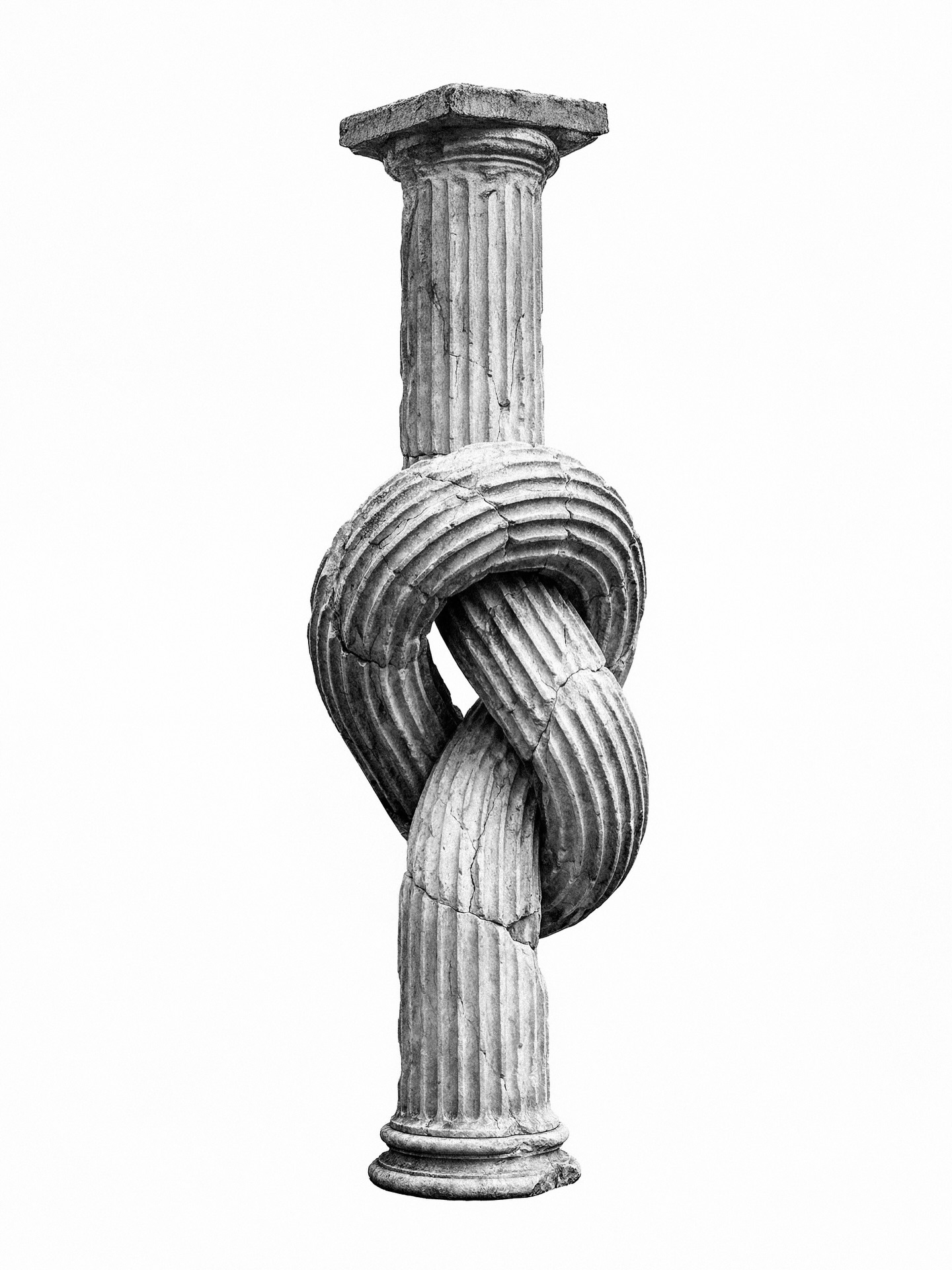


The biographical substrate matters here. Loss and disruption in childhood produce not merely themes but a formal logic: the fragmented portrait, the house unmoored from ground, the knotted column that refuses classical stability. These are images of dislocation rendered through what Wallinger terms “promptography”; a practice that positions the artist as interlocutor rather than sovereign creator, coaxing forms from the latent space of trained models.


What distinguishes this work from mere technical exercise is its theoretical self-awareness. Like the Surrealists’ automatic writing, promptography seeks access to something beyond conscious control, but the unconscious tapped here is profoundly different: a vast statistical amalgamation of human visual culture, neither subjective nor objective but occupying some strange third position. The shark-finned goldfish and the money-laundering washing machine aren’t symbols in the classical sense but emergent phenomena; forms that crystallize from the collision of semantic fields within the model’s architecture.
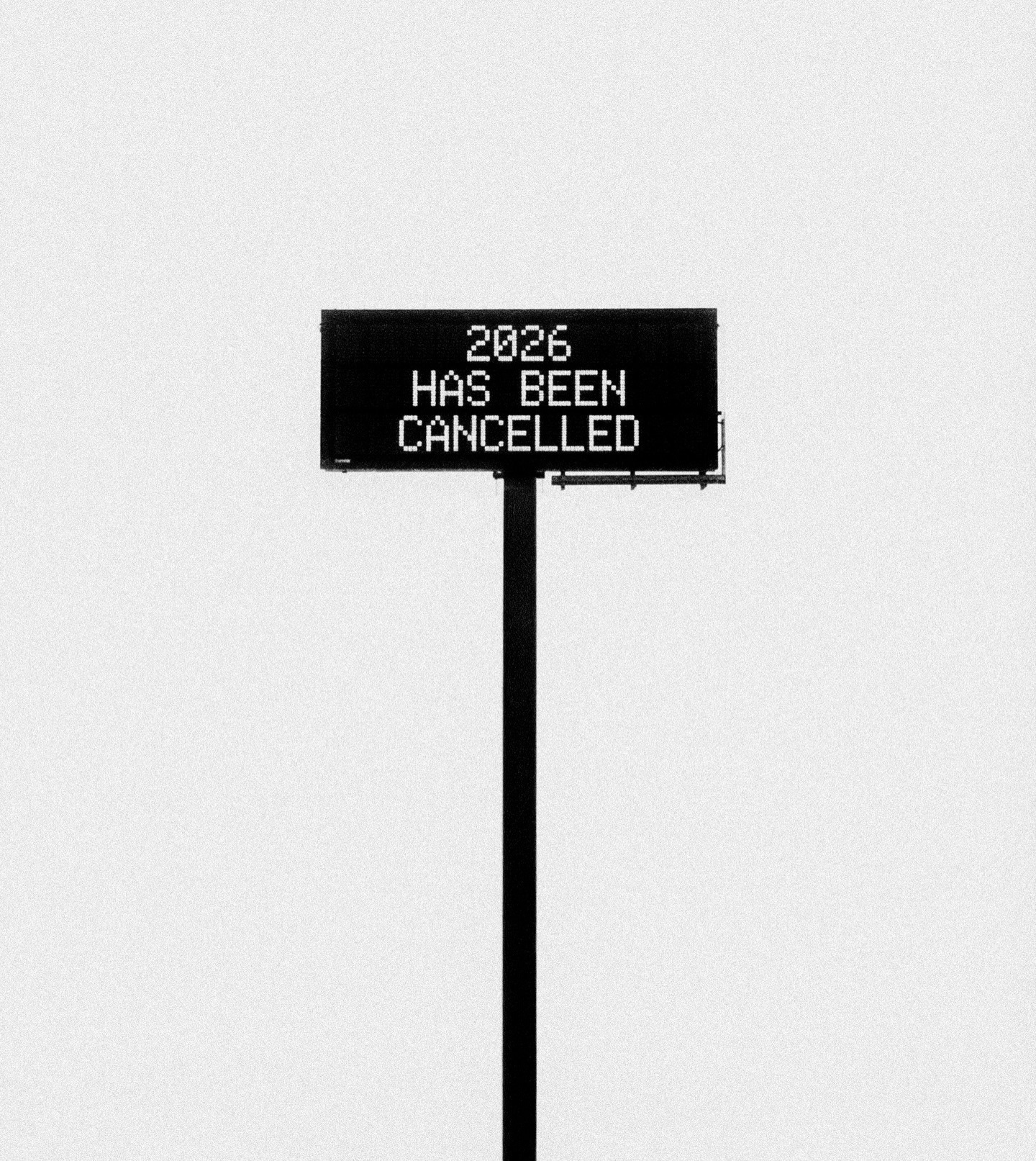
This is image-making as negotiation with otherness, where authorship becomes genuinely distributed across human and non-human agencies.
WHAT’S NEW
OpenAI x Pinterest: The Data Play That Could Redefine Visual AI
Reports suggest OpenAI is exploring its biggest acquisition yet: Pinterest. The appeal isn’t social media clout, but infrastructure; Pinterest’s massive, well-curated image database, mature ad system, and deep merchant relationships. These assets could supercharge OpenAI’s image and video generation tools, strengthening its position against rivals like Google. Investors reacted quickly, pushing Pinterest shares up 3%. While unconfirmed, the move signals a strategic shift: instead of competing with visual platforms, OpenAI may absorb them to own both creation and discovery.
Adobe’s 2026 Vision: When Creative Software Becomes Invisible
Adobe believes 2026 could be “the best time ever to be a creative professional.” According to VP Deepa Subramaniam, AI is no longer experimental; it’s foundational. With generative tools now used daily by most Photoshop and Lightroom users, Adobe is shifting toward flexible, cross-tool workflows. The future points to conversational interfaces, agentic AI, and node-based systems like Project Graph, where creatives design reusable workflows instead of prompts. The goal: less friction, more control, and software that disappears behind creative intent.
Subscription Fatigue: Why Creatives Are Rewriting the Rules by 2026
By 2026, subscription overload may hit a breaking point for artists. Rising costs and locked-in ecosystems are pushing creatives toward free and one-off alternatives that are now genuinely professional. From Blender and DaVinci Resolve to Procreate and Krita, powerful tools no longer require monthly fees. The backlash against price hikes; and missteps like Unity’s pay-per-install scandal; shows a clear shift: artists want fairness, flexibility, and ownership. The creative landscape is splitting, and subscriptions will need to truly earn their place.
KEY VISUAL
Ángel Díaz | @forgrof
“Bandoleria” presents itself as an AI-generated archaeological excavation of a suppressed historical formation: the bandoleros of 19th-century Andalusia, men who inhabited the Sierra de Segura outside the juridical order of the Spanish crown. Díaz’s film operates at a productive intersection; employing generative AI not as spectacle but as a historiographic instrument capable of rendering visible what archival absence has obscured. The bandolero exists primarily as myth, folkloric residue, fragmentary mention in official documents concerned with elimination rather than documentation. Here, the AI’s hallucinatory capacity becomes method: conjuring plausible yet unverifiable scenes from the sparse semantic material available, the model generates what we might call speculative memory.
The work’s formal strategy merits attention. The masked face before departure, horses moving in chromatic binaries, men embraced in cruciform configuration; these are not documentary gestures but allegorical tableaux investigating codes of masculine solidarity, clandestinity, and spiritual withdrawal. The film’s rural landscapes appear simultaneously inhabited and evacuated, a visual paradox that speaks to Díaz’s own positioning in Spain’s “España Vaciada”, those depopulated interior territories bearing the marks of capital’s uneven development.
The film concludes with assemblage: wicker rocking chair, bandolero shawl (predecessor to the flamenco mantón), machete, arranged in a cave; artificial composition presented as quotidian fact. This staging reveals the broader methodological proposition: that all historical reconstruction, whether through archival research or algorithmic generation, involves precisely this kind of artificial arrangement claiming naturalness.
Díaz brings a particular trajectory to this work: Computer Engineering followed by Audiovisual Communication and a M.A. in Film Studies, fieldwork with Indigenous Inkal Awá communities in Colombia, documentary practice, festival organization. His research concerns Andalusian identity’s cinematic construction, the social formations specific to this geographical and cultural position. “Bandoleria” extends this investigation into new technical territory, asking whether AI-generated imagery might access historical truth unavailable to conventional methods; not factual accuracy but something closer to structural or affective veracity, the felt experience of marginality and male homosocial refuge.
That’s all for now — we’ll be back in your inbox next week.
😍
❤️