
THE CURATED LOG XXV
By MITO Universe - @mito.universe

Welcome back to MITO Universe.
This week’s breakthroughs arrive like new cartographers of imagination: tools that unify creation into a single gesture, maps that reorganize entire art histories into navigable constellations, and forecasts urging courage as technology rewrites the rules of expression. They mirror the ways our featured creators work; some transforming machine logic into tactile relics, others bending architecture until its truths feel slightly off-axis, others drifting through memory like a sequence of unresolved dreams.
Innovation, it seems, is no longer a frontier but a mirror, reflecting the worlds we build, distort, and dare to reimagine.
SELECTED CREATORS
Tina Bobbe | @tinabobbe
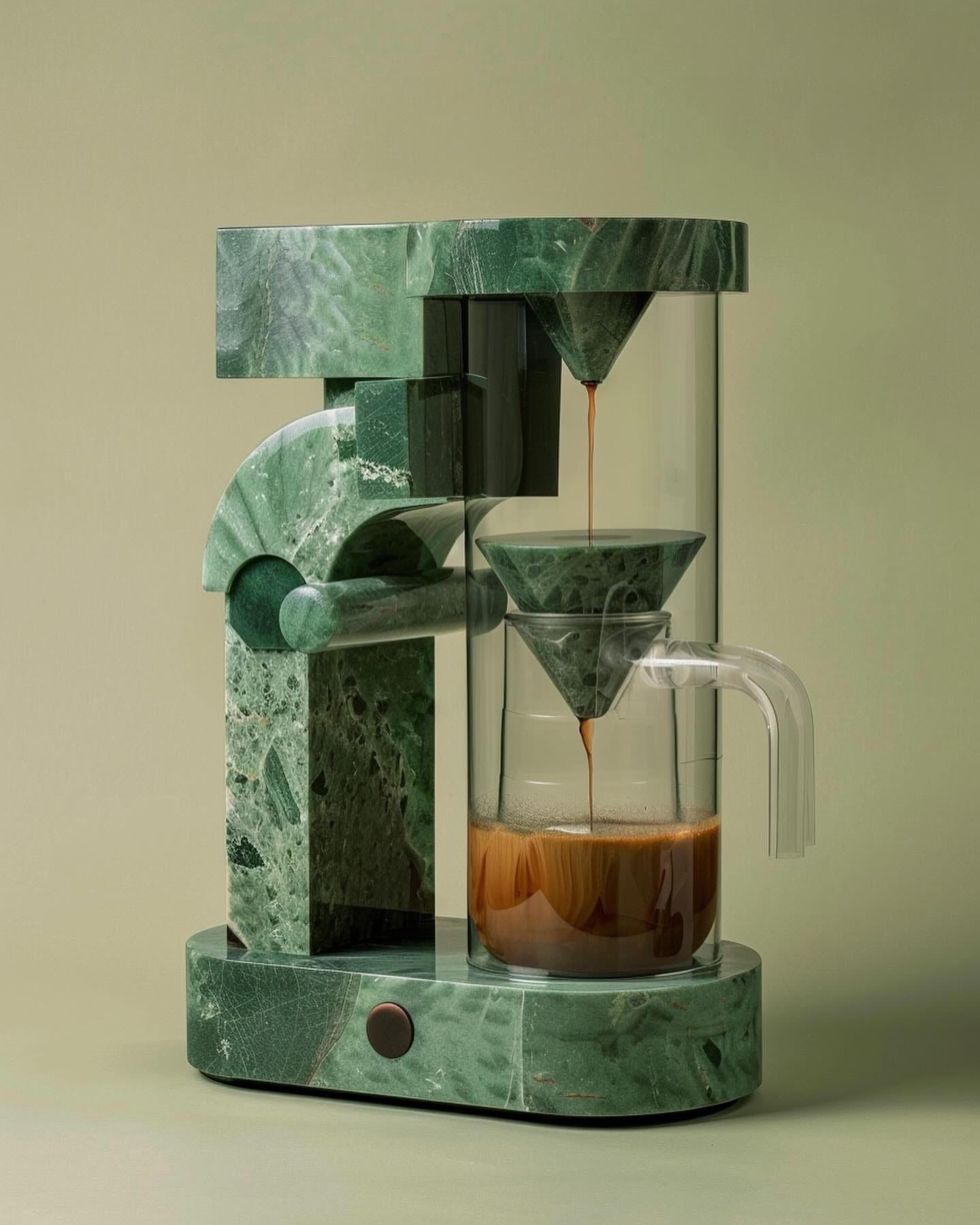
Tina Bobbe’s practice inhabits a peculiar temporal zone; one might call it the space between the algorithm’s dream and the hand’s insistence. Working at the Technical University of Dresden, she operates simultaneously as industrial designer, research associate, and visual conjurer, producing objects that resist the typical binary between digital speculation and material realization. Her espresso machines, particularly the “Pipe Frame” series, exist less as functional appliances than as what we might term post-functional monuments: objects that acknowledge their utility while refusing to be reducible to it.
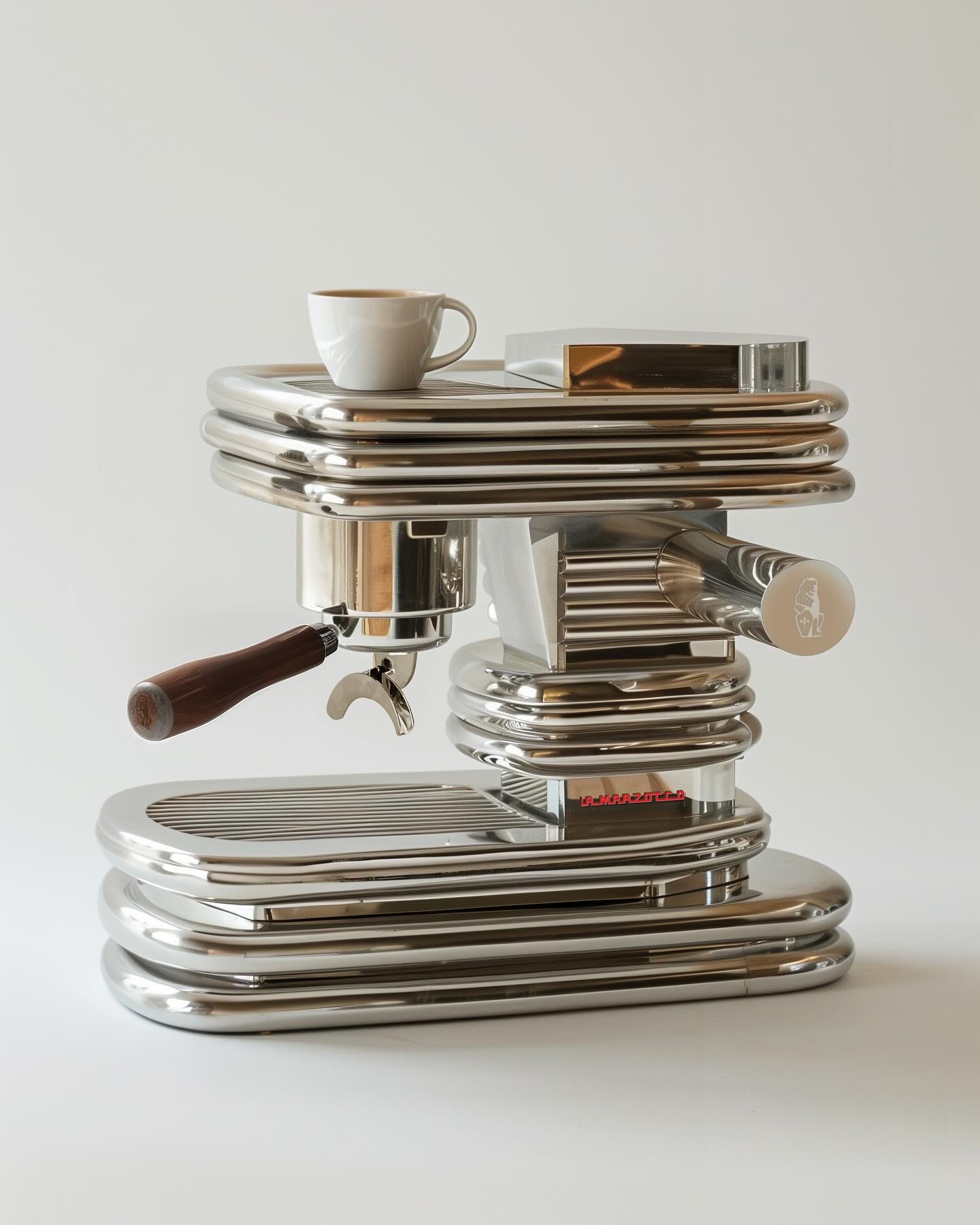


The genealogy here is significant. Bobbe explicitly invokes the Italian design movements of the 1980s: Memphis Group, Alessandro Mendini, Ettore Sottsass; movements that understood the domestic object not as servant but as protagonist in the theater of everyday life. Yet where those postmodern pioneers worked in reaction to modernist functionalism’s austerity, Bobbe operates in an era where AI-generated imagery has fundamentally altered our relationship to the imaginary. Her process involves feeding machine learning systems on a diet of color, form, and historical reference, then laboriously translating these digital hallucinations into physical space through traditional craft techniques.


What emerges are objects that seem to crystallize multiple temporalities: the sculptural ambitions of 1980s Italian design, the algorithmic logic of contemporary image generation, and the patient material practices of handwork. The espresso machine becomes archaeological site, where layers of aesthetic possibility accumulate into a single, impossibly dense artifact. This is design as palimpsest.


Jean Jacques Balzac | @jeanjacquesbalzac
Jean Jacques Balzac operates as both persona and method: a fictional architect-phantom through which a real, Paris-based architect studies the fragile border between built reality and imagined possibility. Working with generative systems as his primary sketchbook, Balzac constructs what he calls “wrong architectures”: spaces that appear precise, almost documentary, yet are quietly misaligned with the world we know. His images inhabit the tension between structural logic and deliberate deformation; where one element slips out of sync, bending reality just enough to trigger awareness.
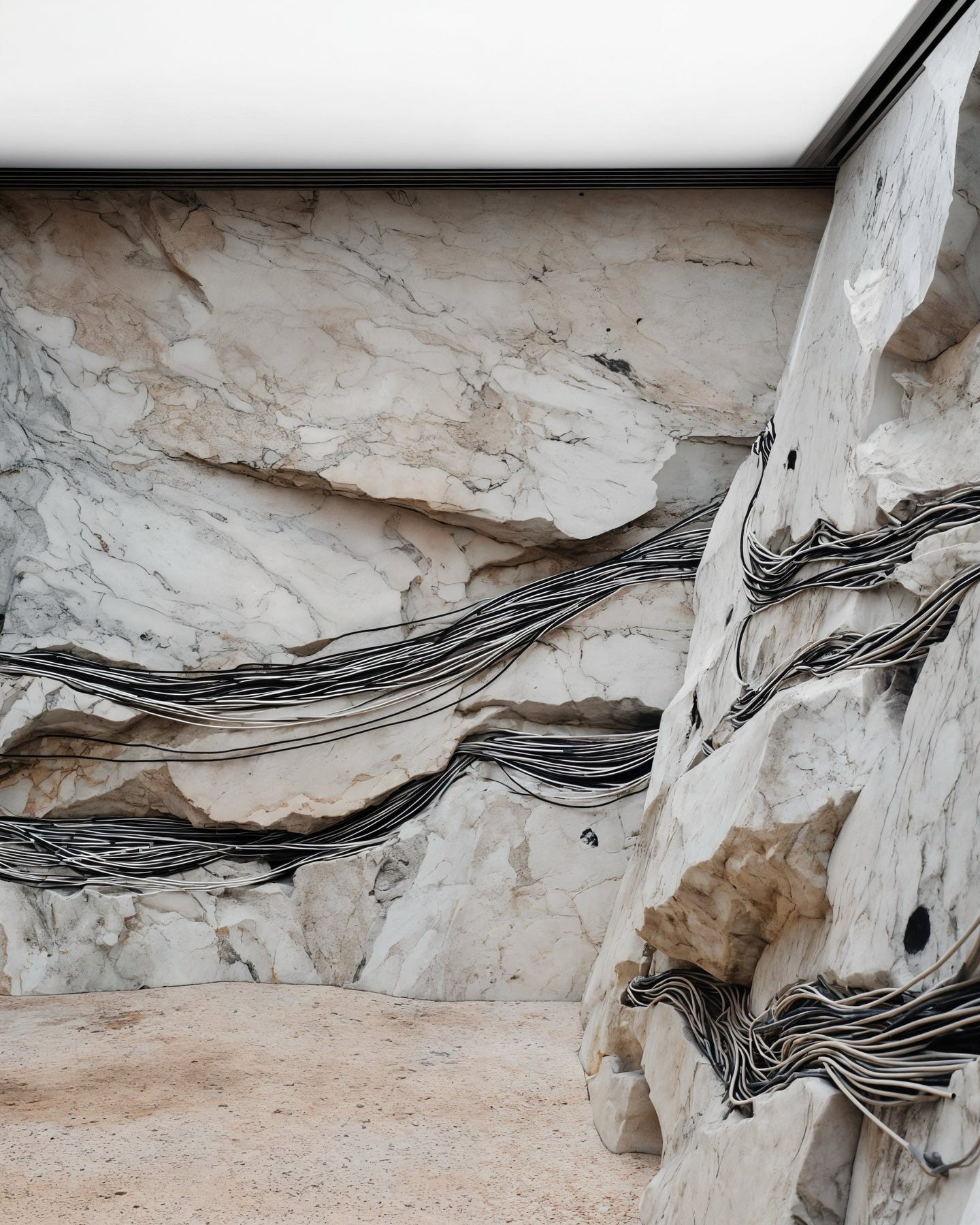


For Balzac, architecture becomes an act of speculation rather than utility. He probes how human gestures mark the natural world, how artificial forms confront organic systems, and how imperfection can become a mode of contemplation. Instead of correcting AI’s irregularities, he welcomes them, treating the machine’s unpredictability as a collaborator that stretches the boundaries of conventional architectural thinking.


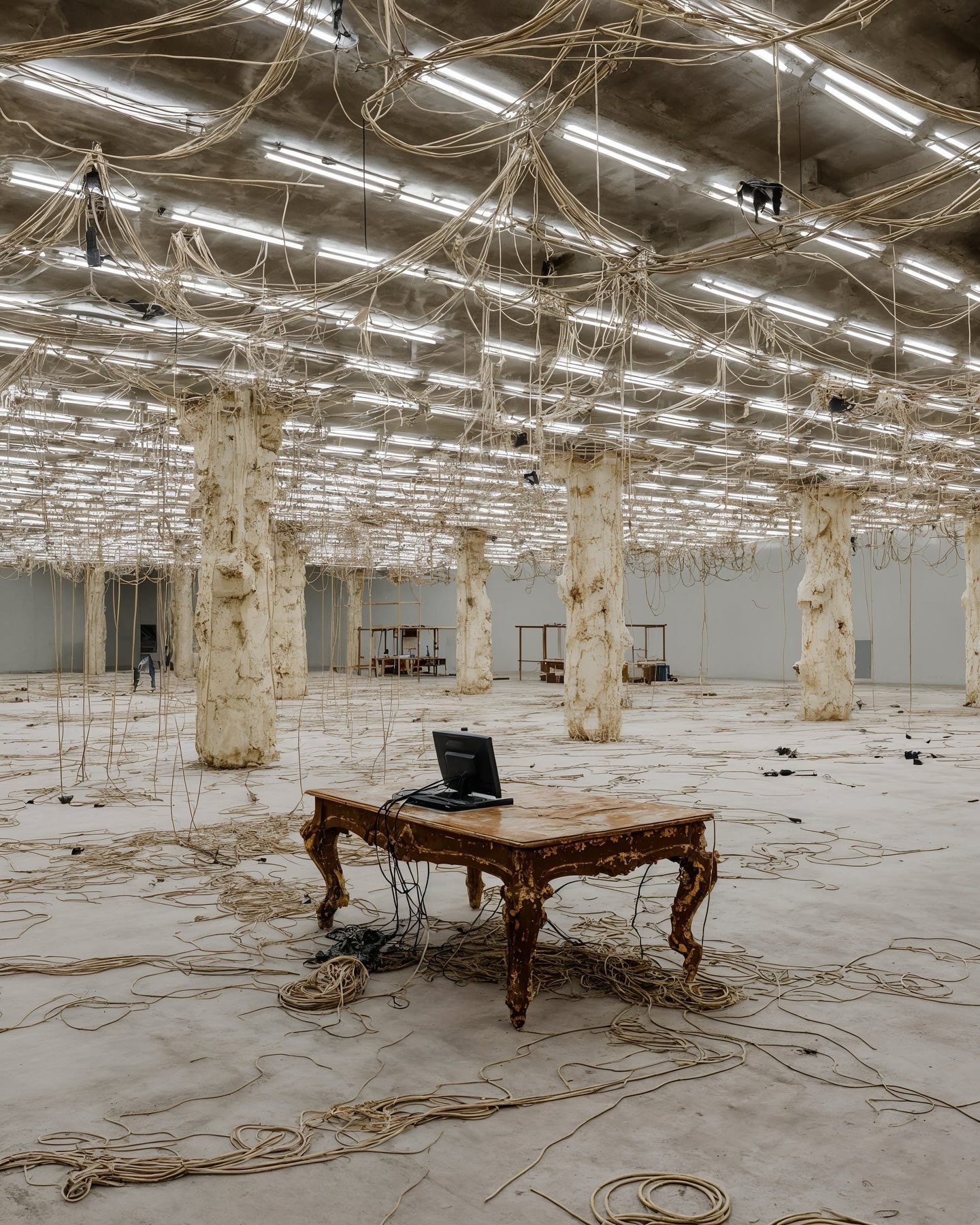
His work embraces the uncanny not for spectacle but for clarity: when an image is nearly believable, viewers project themselves into it, interrogating their assumptions about progress, control, and the evolving relationship between human intelligence and machine intelligence. Through Balzac, architecture is recast as a mutable language; one that reveals our era’s anxieties, desires, and the architectures we may soon inhabit, willingly or not.
WHAT’S NEW
Kling O1: The First True All-in-One Video Creation Model
Kling AI has launched Video O1 and Image O1, the industry’s first unified multimodal models for video and image creation, editing, and understanding. The Video O1 model allows seamless text-to-video generation, precise post-production edits, consistent multi-character scenes, and complex transformations; all from a single prompt. Image O1 offers high-fidelity, multi-image reference editing with remarkable style and lighting preservation. Benchmark tests show massive performance gains over Google Veo, Runway Aleph, Nano Banana, and Dreamina. Together, O1 models streamline workflows for filmmakers, designers, and advertisers, enabling end-to-end creative production in one platform.
Artographer: A Map for Getting Lost and Found in Art
Artographer introduces a zoomable 2D map of 16,000 curated historical artworks, clustering them by visual and semantic similarity using multiple embedding models. In a study with 20 participants, including art historians, researchers observed four exploration behaviors; Jumping, Wandering, Fixation, Revisiting; revealing how spatial interfaces reshape engagement with art. Beyond recommendation algorithms, Artographer exemplifies “Curatorial Interfaces” that prioritize visibility, agency, serendipity, and friction, using AI not to automate judgment but to deepen relational understanding and empower creative discovery.
APAC 2026: Bold Creativity Meets AI Reality
Havas Red’s 2026 Red Sky Predictions urges APAC brands to pair “creative courage” with AI-driven agility. The report identifies 14 trends reshaping communications; from crisis-readiness as a daily norm to synthetic research and private digital communities overtaking public feeds. Trust, transparency, and culturally nuanced storytelling will define brand success as AI becomes deeply embedded in workflows. With GEO (Generative Engine Optimization) emerging and raw creator-led content rising, the agency calls for bold experimentation rooted in human intelligence, not algorithmic shortcuts.
KEY VISUAL
Mert | @mertzv2
In ECHOES., Mertz constructs a drifting tableau of human presence and absence, where bodies, animals, architecture and landscape appear as loose fragments of a shared subconscious. Each frame behaves like a half-remembered photograph: imperfect, grain-soft, suspended between witness and dream. Figures move in repetitive gestures; waiting, wandering, sitting on ruins or dissolving under fabric; while the world around them shifts in scale and logic. A room quietly floods, a subway passes a solitary man, a child stands framed inside a concrete ring as if entering another dimension. Nothing quite aligns, yet everything feels inevitable.
Mertz treats the moving image as an archaeological site of emotion. The piece cycles through motifs of circulation—herds of horses, running dogs, migrating commuters—contrasted with moments of still solitude. The effect is a choreography of inner weather: memory as a looping ecology. Time folds, scenes echo each other, and the viewer becomes attuned to tiny ruptures that reveal the instability of the everyday.
ECHOES. suggests that our lives are composed not of linear stories but of recurring sensations, images we inherit, misplace, distort, and return to. Through minimal intervention and maximal atmosphere, Mertz transforms the ordinary into an uncanny continuum where the familiar is perpetually estranged.
That’s all for now — we’ll be back in your inbox next week.