
THE CURATED LOG XXX
By MITO Universe - @mito.universe

Welcome back to MITO Universe.
This week’s MITO Universe unfolds across thresholds. In the industry, algorithms are being negotiated as collaborators rather than intruders: cinema debating authorship, music redefining tools instead of replacing hands, museums learning to listen through machines. Across these conversations, a shared tension emerges; between structure and expression, heritage and system, control and vulnerability.
The selected creators inhabit that same fault line. Their work moves through architecture and body, craft and computation, memory and transformation. What connects the headlines and the practices is not technology itself, but intention: AI as a frame, a translator, a mirror. Not spectacle—but authorship under new conditions.
*NEW
We’re opening a new ritual inside the MITO Universe: Universe Challenge.
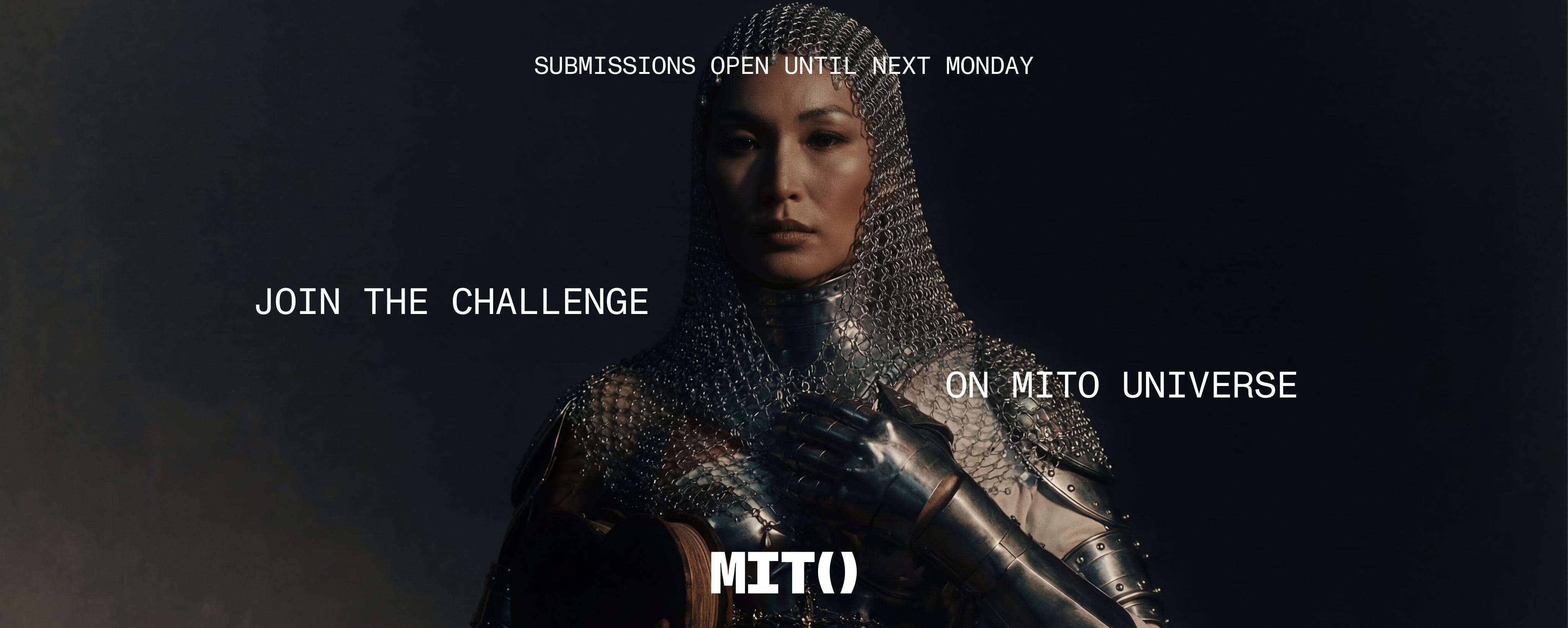
One brief. One week. A shared moment of focus.
Every week, a single open prompt invites infinite interpretations; no tool rules, no stylistic limits. Just intention, atmosphere, and authorship. This isn’t about speed or spectacle, but about how ideas are held, framed, and protected.
The first challenge, “Guarded Pages,” asks for one cinematic image where something precious is being kept safe: a relic, a file, a memory, a page. The story should live in the image itself.
Not a contest platform. A creative ritual.
SELECTED CREATORS
The MITO Universe is shaped by the artists who inhabit it. Each week, we highlight a creator using AI with intention and authorship. If you’re building worlds or refining a personal visual language, this is your space. Join the community and create your MITO Universe account.
MITO UNIVERSE CREATIVE SPOTLIGHT: Sam Checa | @sam
Sam Checa’s photographic practice negotiates the tense threshold between architectural minimalism and the human figure, constructing images that exist as studies in formal reduction and existential isolation. His black-and-white compositions reveal a sophisticated understanding of how geometric space can both frame and alienate the body; a dialectic Walter Benjamin identified in modernity’s transformation of perception itself.
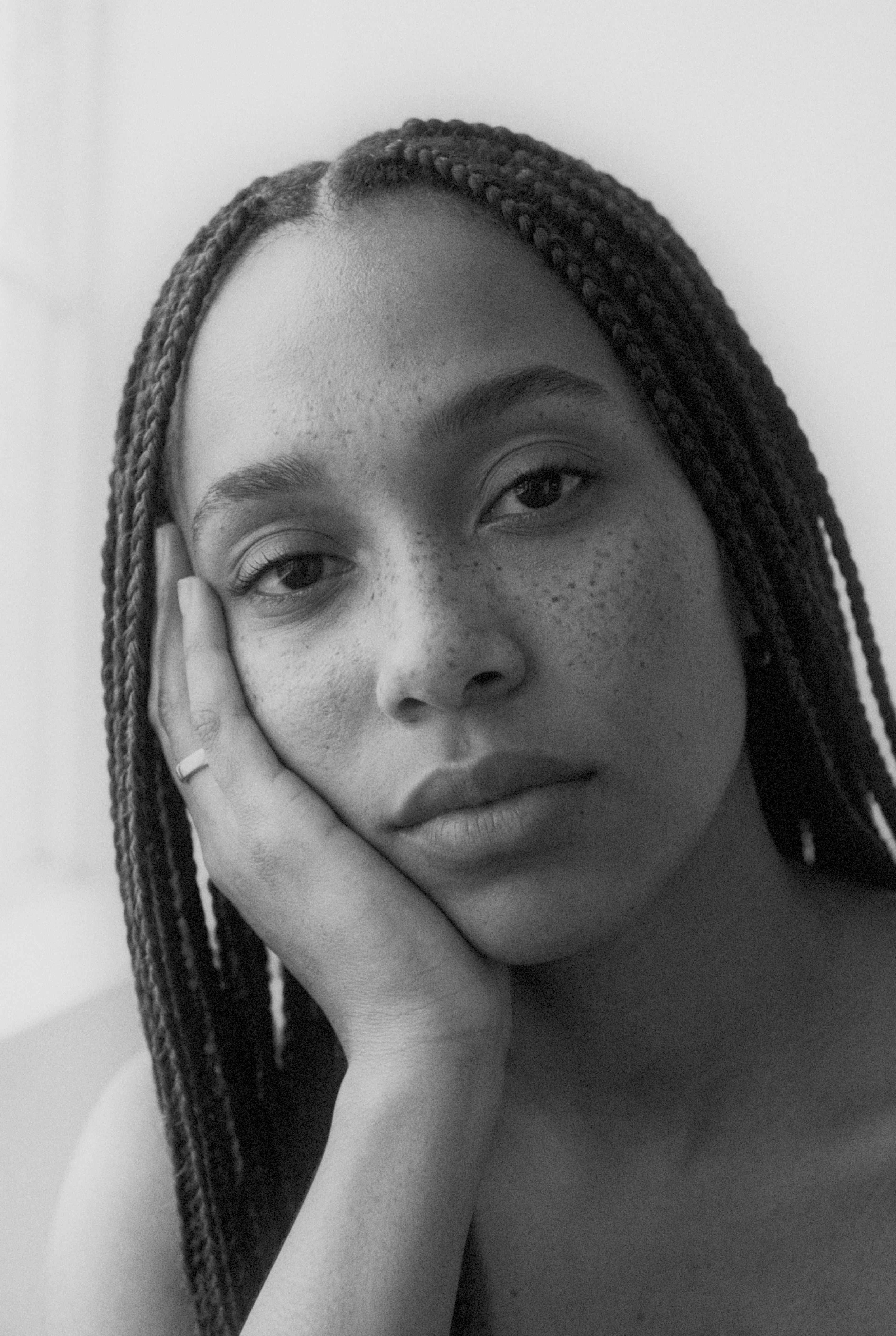
In the portrait work, faces emerge against brutalist concrete, the texture of poured cement operating as both material fact and temporal inscription. The severe horizontal lines and shadow geometries recall Constructivism’s faith in pure form, yet Checa introduces something Constructivism refused: the psychological interiority of the photographed subject. These are not universal types but particular presences, caught in a studied stillness that suggests both self-possession and vulnerability.


The architectural image; that extraordinary desert resort carved into sandstone; extends this investigation into pure spatial experience. Here, the reflection pool functions as Checa’s theoretical statement: symmetry as ontological doubling, the mirrored archway suggesting Borges’s infinite regress. The lounge chairs stand as empty modernist promises, luxury rendered abstract through formal composition.
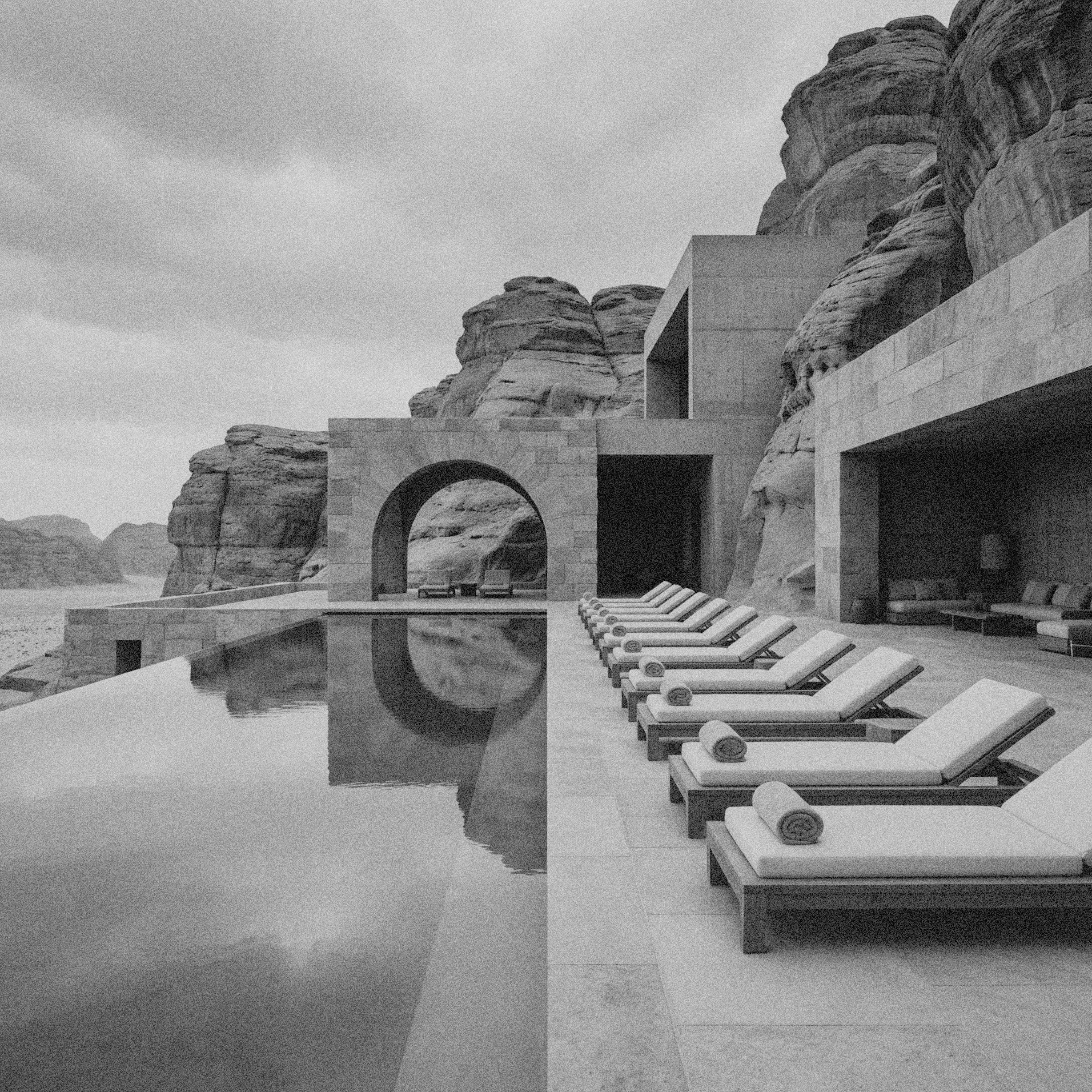
What distinguishes Checa's work is precisely this ambivalence: an aesthetic that embraces minimalist rigor while maintaining an undertow of human fragility, form perpetually haunted by its opposite.
Semyon Starov | @morevsoli
Starov’s practice exists at a threshold where ancient craft techniques encounter the dematerializing force of artificial intelligence; a meeting point that reveals something essential about contemporary making. His jewelry work draws from the dense material culture of nineteenth-century Russia: pearl embroidery, gold filigree, the weighted ceremonial headdresses of the Russian North. These are objects that bear the trace of countless hands, of labor accumulated across generations.
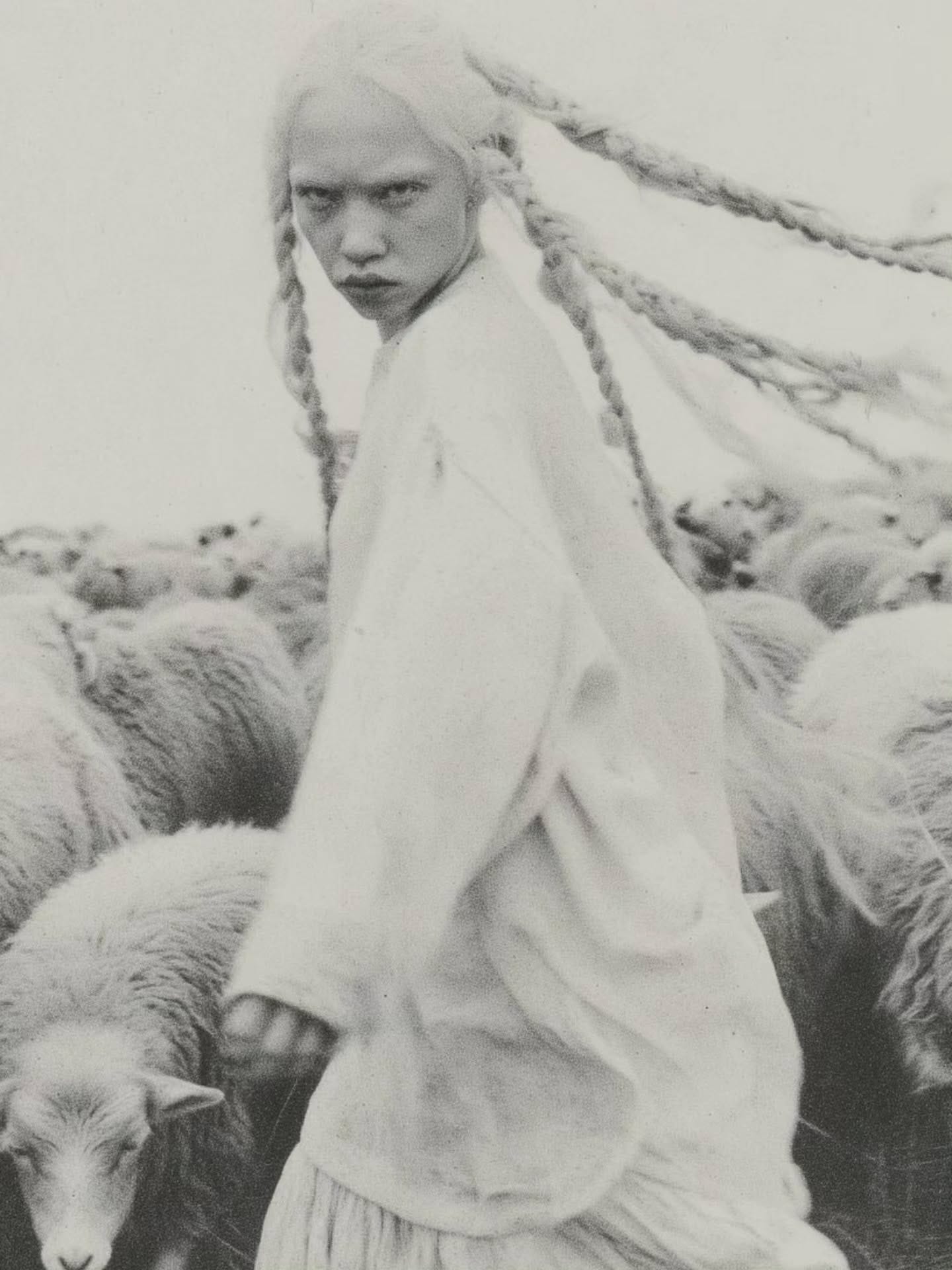
Yet in his AI-generated imagery, we witness a different kind of inheritance. Here, the human figure; often bearing albinism, rendered with an almost liturgical luminosity; appears suspended between archaic costume and algorithmic interpretation. The floral scarves and traditional dress become spectral, simultaneously hyperreal and impossible. Motion blur transforms sheep into pure kinetic energy; atmospheric phenomena assume an almost eschatological intensity.



What Starov stages is not simply a juxtaposition of old and new, but an inquiry into how cultural memory persists through radical technological transformation. The AI doesn’t merely reproduce folkloric imagery; it metabolizes it, generating forms that maintain a strange fidelity to the weight and texture of historical materials while existing entirely beyond them. This is heritage as hallucination, tradition as neural network dream. The question becomes: what survives the passage through the algorithm? What essential quality of the handmade object can be transmitted through purely digital means?
WHAT’S NEW
Hollywood Meets the Algorithm: Entertainment Rewrites Its Future at CES 2026
At CES 2026, the entertainment industry took center stage in conversations about AI, creators, and the future of storytelling. Across 25+ panels, voices from studios, tech companies, and the creator economy debated AI’s cinematic potential, its impact on advertising, and long-standing fears around authorship and copyright. While skepticism remains, many speakers framed AI as a creative equalizer rather than a replacement—another tool expanding who gets to tell stories. The rise of internet-native creators was positioned not as a threat, but as the next generation of filmmakers shaping culture from the margins inward.
From Samples to Systems: Splice and UMG Bet on AI Music Tools
Splice has partnered with Universal Music Group to develop AI-powered music tools designed around artist control and sonic fidelity. Rather than fully generative shortcuts, the collaboration focuses on virtual instruments and workflows that allow UMG artists to integrate their own sounds into Splice’s AI systems. The move reflects a broader industry shift toward ethical, creator-led AI, following UMG’s recent steps into generative platforms. The message is clear: AI in music isn’t about replacing human sound—it’s about building smarter tools around it.
Neurodiverse Futures: AI as a Tool for Inclusion
Mansfield Museum has launched Neurodiverse Futures, an AI-driven exhibition created by autistic and neurodivergent young people. Developed through hands-on workshops with artists, technologists, and academics, the project uses AI to translate drawings, movement, sound, and imagination into an immersive visual installation. Crucially, the exhibition frames AI not as the subject but as a listening device—one that amplifies voices often excluded from cultural spaces. The result is a powerful case for AI as access, expression, and collective authorship.
That’s all for now — we’ll be back in your inbox next week.