
THE CURATED LOG XXXI
By MITO Universe - @mito.universe

Welcome back to MITO Universe.
The week moved forward without spectacle, yet its shifts were unmistakable. Tools refined themselves. Systems grew more responsive. Attention drifted away from display and toward the quiet mechanics of making; how work is assembled, sustained, and carried through time. AI receded into the background, present as an underlying condition rather than a headline.
A common sensibility runs through these developments: an awareness of tempo. The most resonant work understood when to wait. Meaning stayed enclosed, held in place by form, pressure, and care. In a culture driven by immediacy, that pause carries weight.
This edition remains in that suspended space; where structure settles, images gather tension, and emergence arrives on its own terms.
Universe Challenge · Winner #CHALLENGE-1
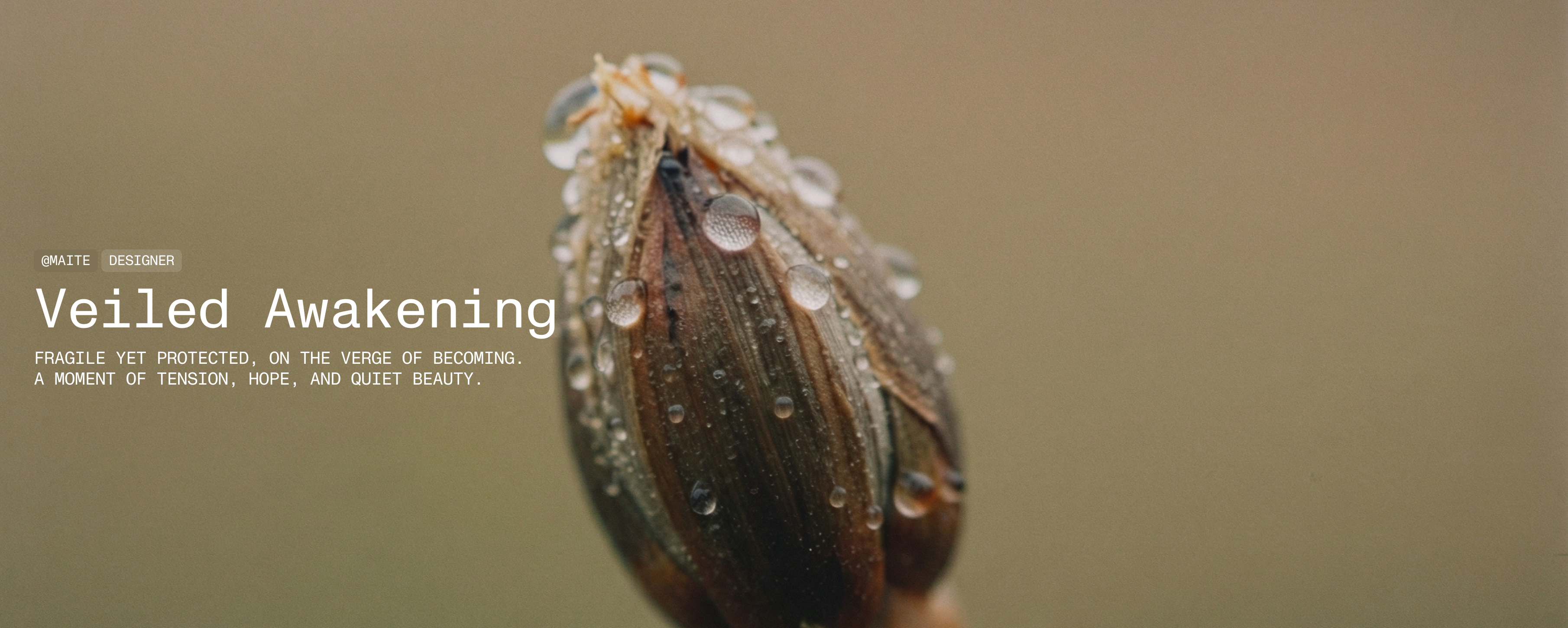
“Veiled Awakening” by Maite Iturriaga @maite was chosen by the community for how quietly it holds its meaning preventing revelation rather than staging it. A fragile bud, sealed and covered in dew, becomes an image about patience, protection, and the tension before emergence. Nothing performs. Everything waits.
This piece understands the brief not as an object to guard, but as a moment suspended in care.
Thank you to everyone who participated and shared their interpretations of Guarded Pages. The ritual only exists because of you.
Stay close. for the next Universe Challenge.
SELECTED CREATORS
The MITO Universe grows through the people who give it form. Each week, we spotlight a creator working with AI as a deliberate, authored practice. If you’re shaping worlds, systems, or a distinct visual language, this is where it belongs. Become part of the community and start building your own MITO Universe account.
MITO UNIVERSE CREATIVE SPOTLIGHT: Manu Tegar | @manutegar

Manu Tegar operates at the threshold where computational logic meets corporeal presence, generating images that function as theoretical propositions about contemporary visuality. Working from Madrid as both graphic and brand designer at mendesaltaren, Tegar has turned toward artificial intelligence not as mere tool but as a collaborator in materializing what we might call the "post-human surface."


His imagery articulates a peculiar ontology: bodies rendered with hyperreal precision yet manifestly synthetic, existing in that uncanny zone where recognition falters. The sumo wrestlers locked in suspended combat, the flushed face suggesting either exertion or digital artifact, the translucent hand holding impossible light, the X-rayed computer mouse revealing its mechanical interiority, the model wearing a transparent mask; each image performs a kind of phenomenological experiment. They ask: what becomes visible when the algorithm interprets flesh, transparency, intensity?
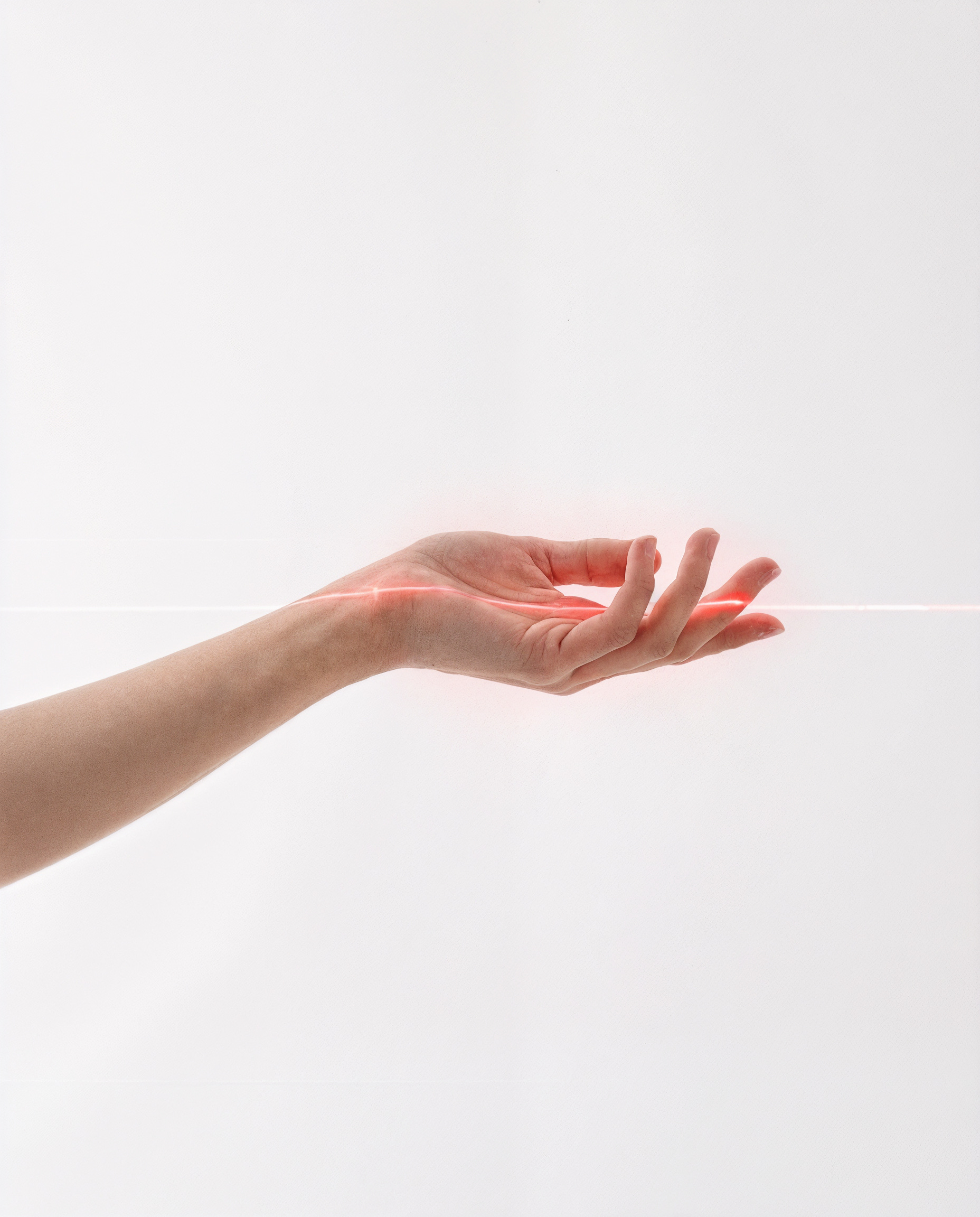
Tegar's practice recalls Walter Benjamin's insight about mechanical reproduction, but inverts it. Here, the original itself is absent; only the generated surface remains. These are not representations but presentations—materialities that exist primarily as data configurations, bringing into appearance something that never was. The work suggests that AI doesn't simply reproduce our world but produces a parallel one, governed by different laws of coherence, where materiality itself becomes a theoretical question rather than a given condition.
Hannes Caspar | @caspar.jade
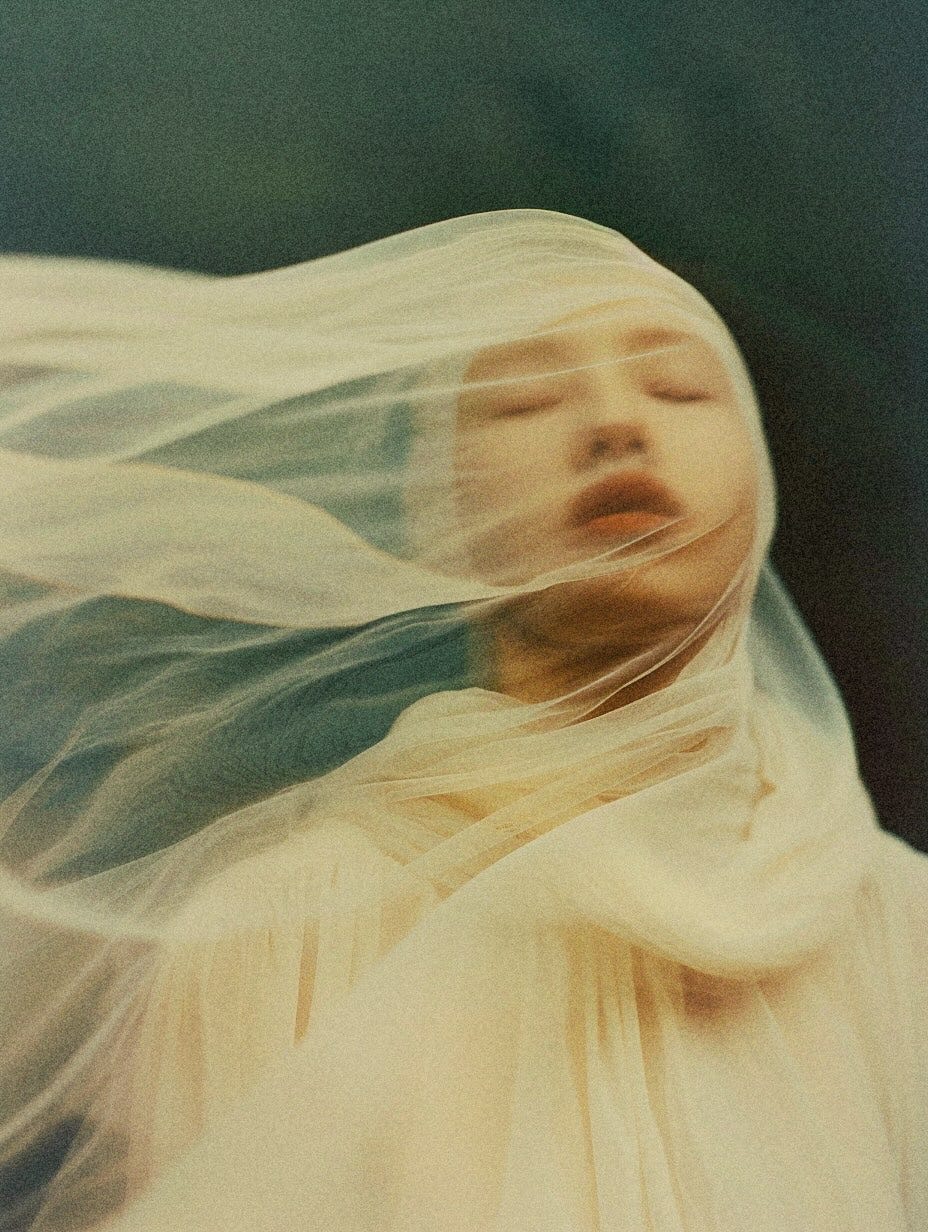


Hannes Caspar occupies a peculiar position within contemporary image-making—a photographer who has become what we might call a post-photographic director, orchestrating synthetic visions through algorithmic means while retaining the sensibility of someone trained in the indexical tradition. His work exemplifies what could be termed the “ontological blur” of AI-generated imagery: pictures that possess photographic texture and cinematic affect yet emerge from computational processes fundamentally alien to lens-based capture.


What distinguishes Caspar’s practice is the persistence of photographic intentionality within non-photographic production. The grain, the motion blur, the chromatic aberrations; these simulate not merely the appearance of analog film but its entire phenomenological framework. We encounter images that seem to remember being photographs, haunted by a materiality they never possessed. The hand behind the curtain, the fabric caught mid-flight, the blurred forest; each carries the temporal signature of exposure without having been exposed to anything.


This raises essential questions about authorship in the age of generative systems. Caspar describes making "many small decisions" that shape the image's effect, a process closer to curation or editorial direction than traditional creation. The work thus exists in productive tension: between human aesthetic judgment and machinic execution, between photographic heritage and computational futurity, between the real and its increasingly sophisticated simulation.
WHAT’S NEW
Apple Just Turned AI Into a Studio Assistant
Apple has unveiled Apple Creator Studio, a new all-in-one subscription bringing together Final Cut Pro, Logic Pro, Pixelmator Pro, Motion, Compressor, and MainStage; now infused with AI-driven features. Designed for video editors, musicians, and visual creators, the suite focuses on accelerating workflows without sacrificing authorship or privacy. New tools like transcript-based editing, beat detection, AI session players, and generative image features turn Apple’s ecosystem into a cohesive production infrastructure. It signals Apple’s strongest move yet toward AI-assisted, end-to-end creative systems.
Veo 3.1 Pushes Generative Video Into Production Reality
Google upgrades Veo with version 3.1, introducing 4K output, vertical (9:16) formats, and significantly improved realism. Beyond visual fidelity, Veo now generates native audio aligned with scene context; bridging a major gap in generative video storytelling. Enhanced reference image controls, better physics, and stronger prompt adherence make it viable for real-world production, from ads to social content. With Veo 3 Fast, creators can iterate quickly without sacrificing quality, signaling a shift from experimental clips to scalable video pipelines.
LTX: Storyboard First. Generate Later.
LTX by Lightricks has launched a new Storyboard Builder that reframes how AI video projects begin. Instead of prompting shot by shot, creators paste a script or idea and receive a fully structured storyboard; scenes, shots, beats, and reusable elements extracted automatically. Characters, objects, and locations stay consistent across the project, reducing visual drift and prompt chaos. The result: clearer direction, fewer iterations, and a workflow that prioritizes structure before generation. It’s less about making images faster; and more about building coherence first.
KEY VISUAL
Laura López – @laloto.design
In testing MITO AI to create a conceptual fashion film for Gimaguas, graphic designer Laura López enters a peculiar temporal zone where the traditional production apparatus of cinema collapses into algorithmic instantiation. What emerges in these frames; the minimalist staging, the chrome sphere as pure indexical presence, the clock face inscribed with “gimaguas” like a corporate mandala; is less a film than a meditation on the conditions of image-making itself in our current moment.
López’s work holds particular significance for us not merely as observers but as collaborators who have witnessed her development. There is something profoundly moving in seeing a Laura grasp what Walter Benjamin might call the “optical unconscious” of AI: the way these tools reveal not human intention perfectly realized, but rather the strange materiality of datasets, the ghostly aesthetics of training corpora.
The fashion film format; itself a hybrid commercial-artistic form; becomes in López’s hands a site for investigating how AI collapses production time while preserving, even intensifying, the atmospheric duration of contemplation. Each frame possesses the uncanny stillness of images that never quite existed as photographs, that bypass the indexical trace of light on sensor. This is image-making as pure surface without depth, yet López stages this very condition as her subject, transforming limitation into critical reflection.
That’s all for now — we’ll be back in your inbox next week.