
THE CURATED LOG XXXIII
By MITO Universe - @mito.universe

Welcome back to MITO Universe.
Across the week, infrastructure shifts: MITO AI “infinite canvas” for collaborative making, a multi-shot engine that behaves like an AI director, and a platform turning twenty by teaching footage to edit itself. These utilities feel less like tools than architecture: rooms where images rehearse their own futures.
Our featured work lingers in similar corridors; the body as luminous laboratory, identity as a seam of light; while another practice stages the algorithmic imaginary’s melancholic weather, and a third models disciplined avatar-craft. Between aura and clearing, between surfaces and circuits, form becomes a tide system: flows, thresholds, dwellings under communal illumination.
SELECTED CREATORS
The MITO Universe grows through the people who give it form. Each week, we spotlight a creator working with AI as a deliberate, authored practice. If you’re shaping worlds, systems, or a distinct visual language, this is where it belongs. Become part of the community and start building your own MITO Universe account.
MITO UNIVERSE CREATIVE SPOTLIGHT: Ángel Díaz | @forgrof
Ángel Díaz’s MITO Universe portfolio reads as a sustained inquiry into the body as luminous laboratory, where presence diffuses into a visual register calibrated by light. “Bandoleria,” featured in The Curated Log XXIX, treats Andalusian memory as contested excavation, with MITO AI acting as a historiographic instrument.
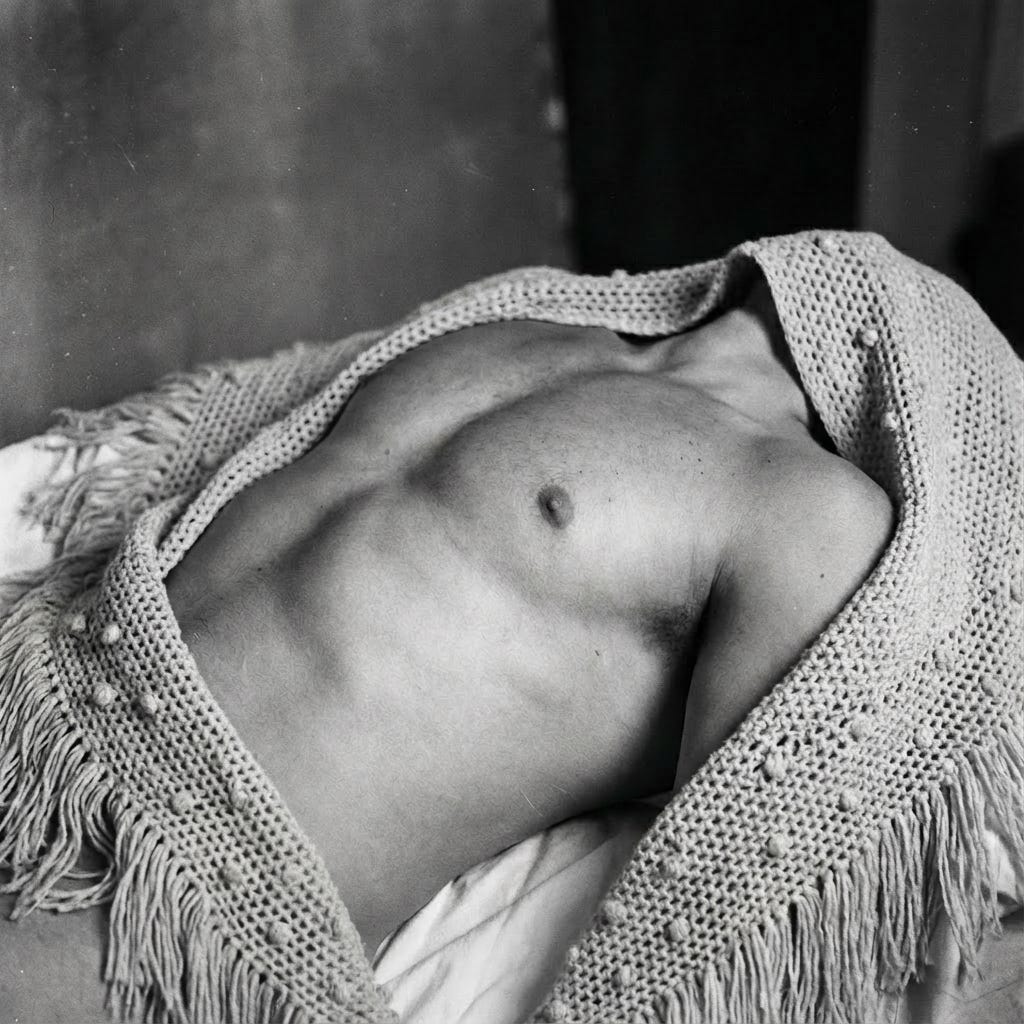
The black-and-white works practice strategic fragmentation: torsos fringed, fur pressed to skin, figures nested in hide. Each frame builds tactile corridors, architectural passages where texture becomes knowledge. In color, light assumes agency—cream on skin as sculptural brace, prism-flare as golden drift, silhouettes meeting coastal radiance—body and environment circulating like tides through a shared aperture.



Historically, the series converses with Malevich’s austerity, Lissitzky’s spatial grammar, and Kabakov’s dramaturgy of the everyday. Benjamin’s aura migrates from object to interval; Heidegger’s clearing appears as a pool of illumination; Foucault’s surfaces reorganize sensorial discipline; Marx lingers in the logistics of images, their labor and distribution across platforms. Within the networks of contemporary media and surveillance, identity persists as a moving seam—assembled, dissolved, reassembled.
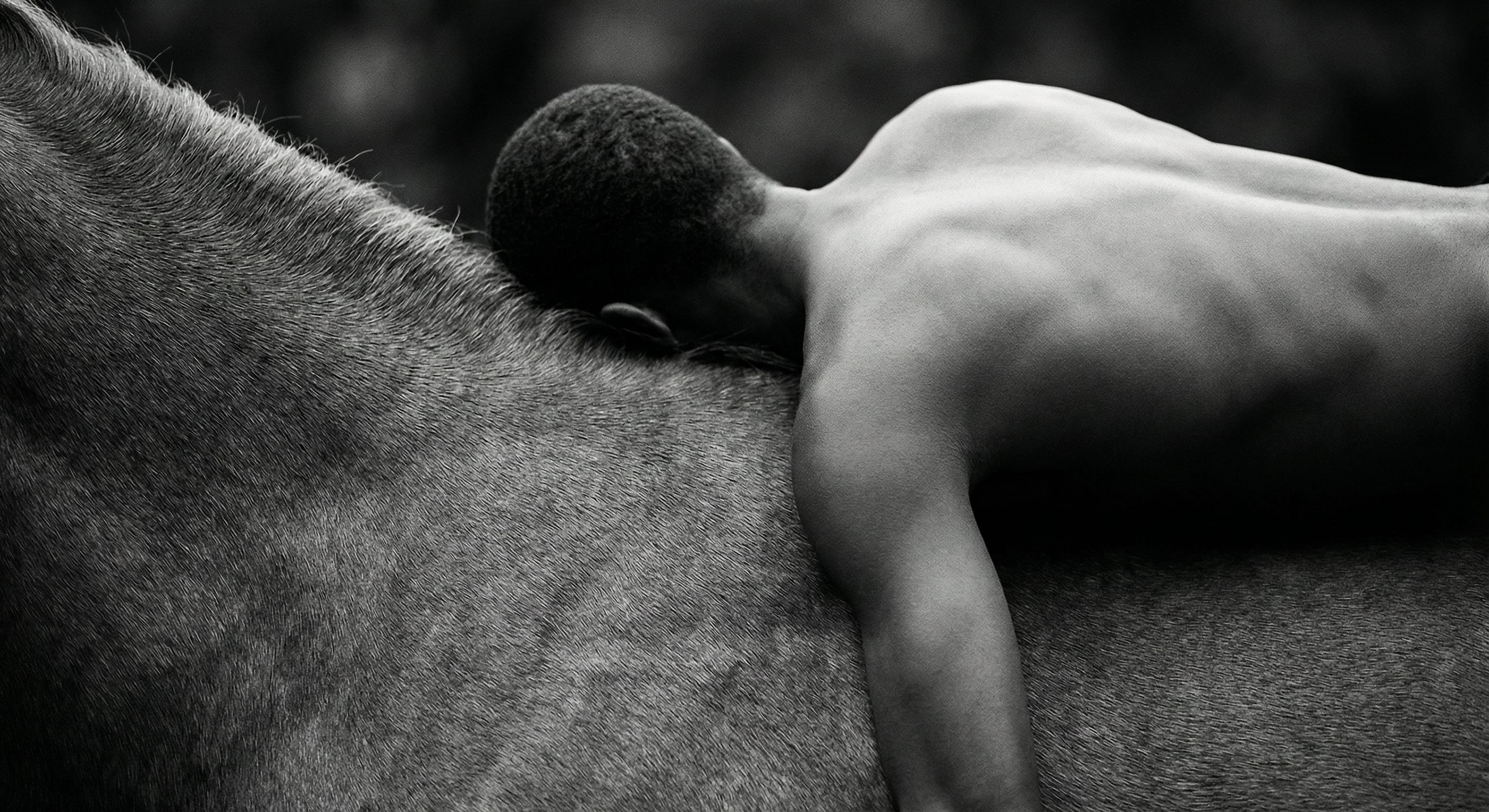
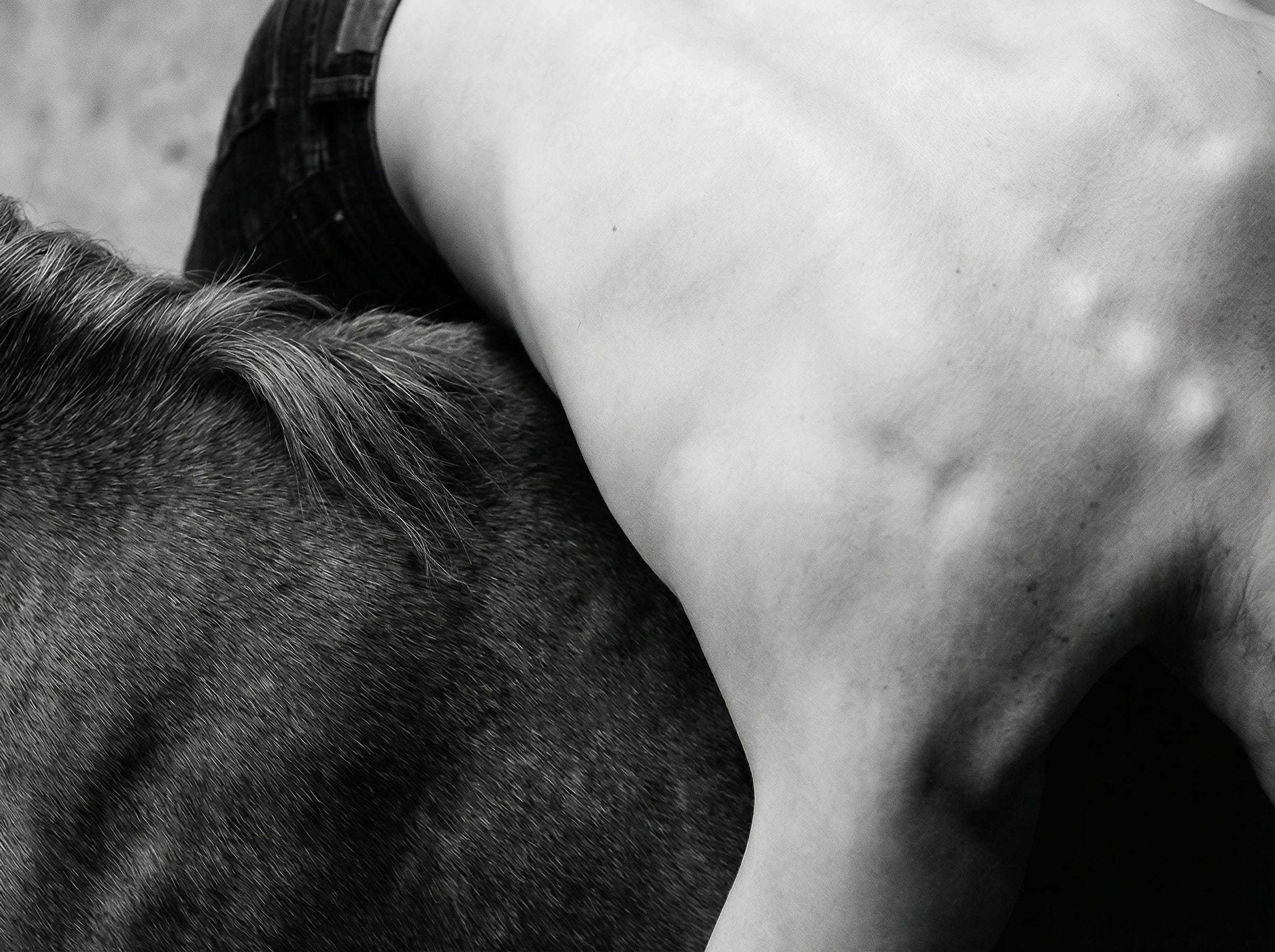
Díaz proposes an ethics of attention: a choreography of thresholds where flesh, lens, and reflection build provisional rooms. The political horizon quietly glimmers here: form as shared infrastructure, feeling as a commons under light.
Maxim Baev | @baevmaxim
Maxim Baev’s AI-generated imagery operates at the threshold where photographic authority collapses into computational fantasy. These works; featuring draped figures against Icelandic voids, armored bodies beside baroque tapestries, horses rendered in tones of digital decay; retain the formal architecture of fashion photography while evacuating its indexical certainty.
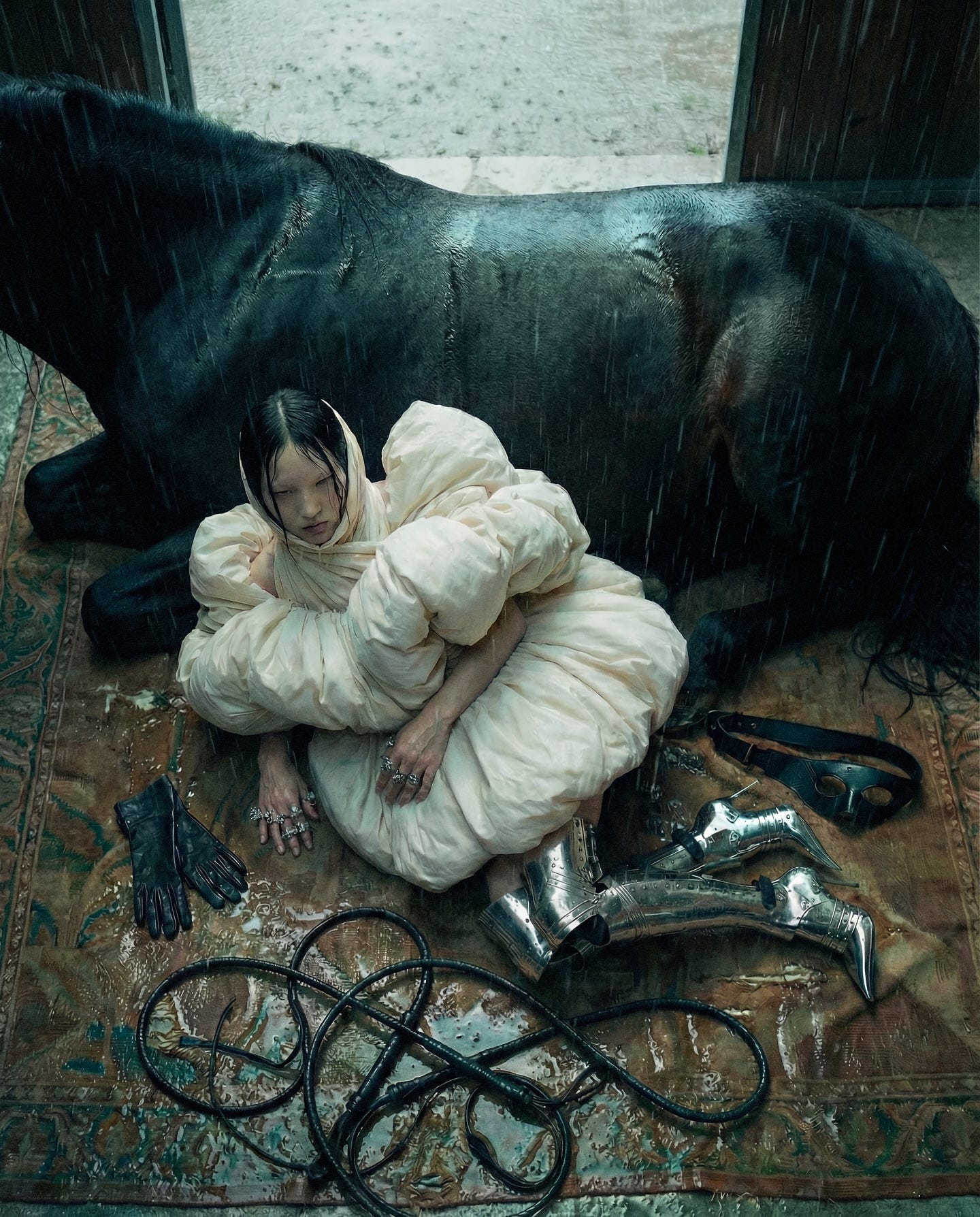
What remains is neither photograph nor painting but something closer to what we might call the algorithmic imaginary: a space where the model’s body becomes pure surface for the projection of accumulated visual data.
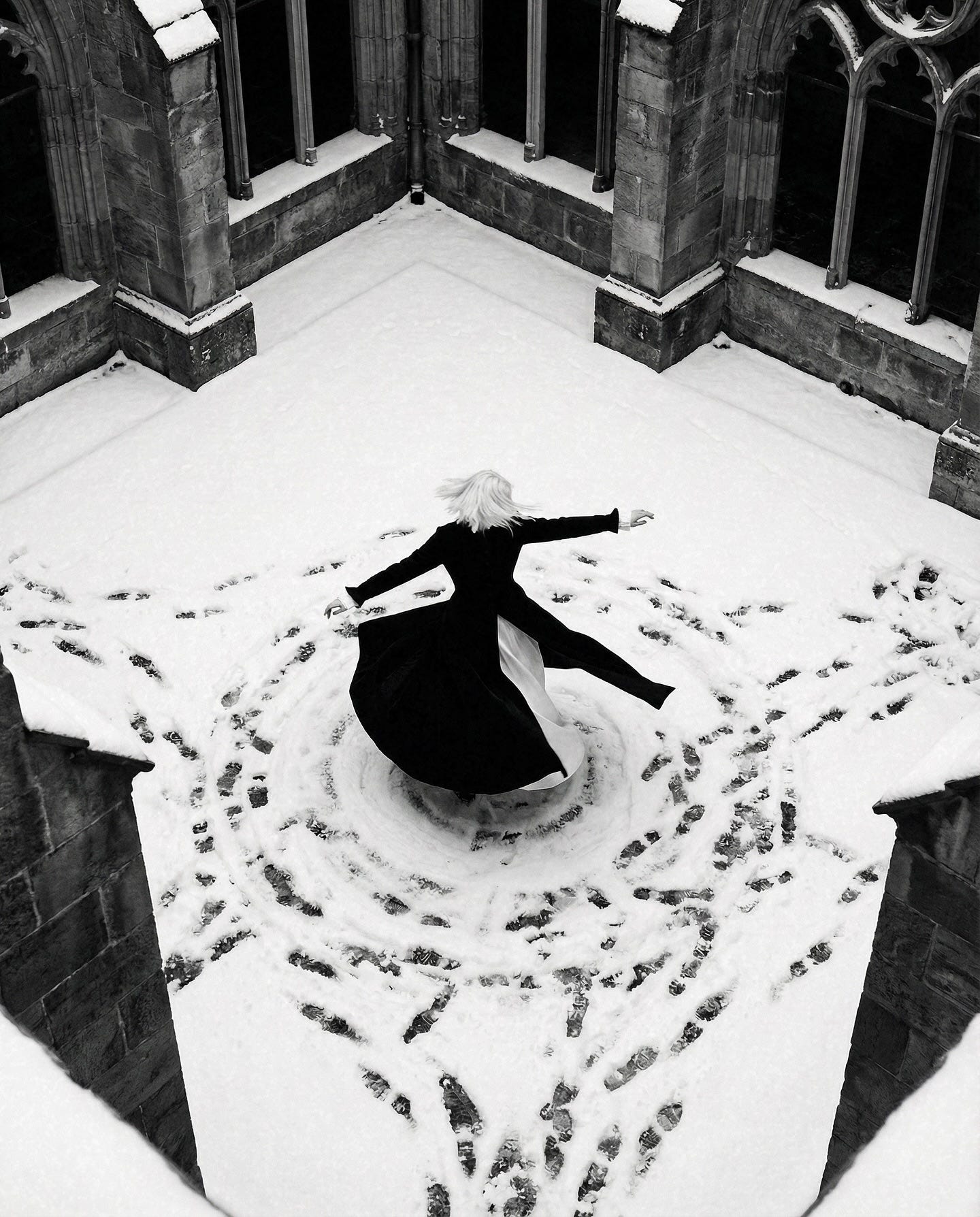


The shattered windshield, the snow angel in Gothic ruins, the figure standing on glacial ice; each composition bears the haunted quality of images trained on countless fashion editorials, art historical references, cinematic stills. Baev, known for his editorial work across Vogue’s international editions, here relinquishes the camera’s authority to the neural network’s probabilistic dreaming. The armor and medieval settings suggest a temporal collapse, as if the algorithm has compressed fashion history into a single, perpetually decaying present.
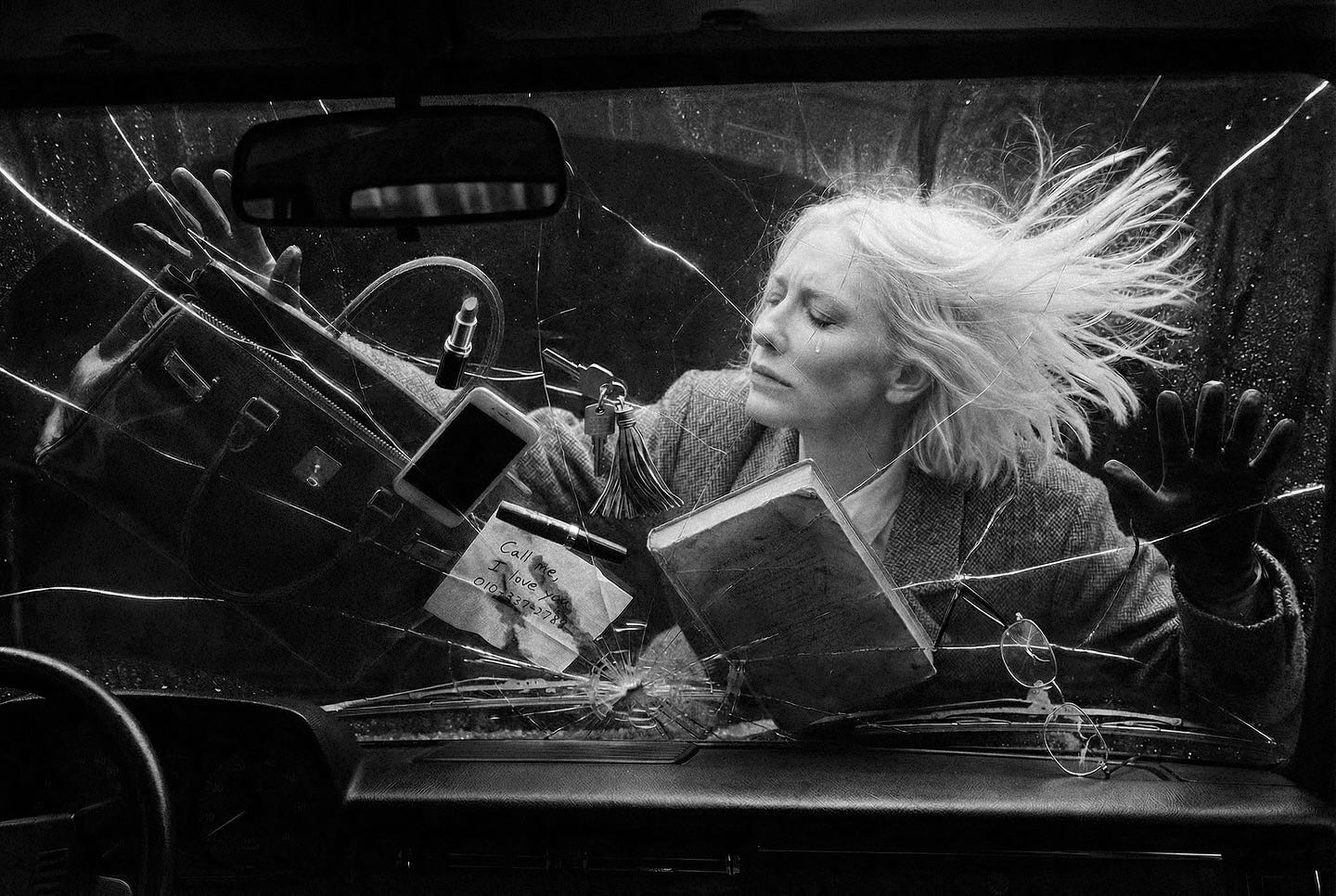
What distinguishes this work from mere AI spectacle is its embrace of melancholy and ruin. These are not images of technological optimism but of beautiful desolation; a meditation on authorship itself becoming obsolete, diffused into datasets and training parameters. The photographer remains, but transformed: curator of prompts, archaeologist of machine vision.
WHAT’S NEW
MITO AI Launches an ‘Infinite Canvas’ for Filmmakers
MITO AI officially rolls out a collaborative platform that centralizes image, video, audio, and storyboarding into one non-linear “infinite canvas,” aiming to fix today’s fragmented AI video workflows. A pre-seed led by Lightspeed Venture Partners backs the launch after tests with ~200 beta users. The suite connects to leading models, supports long-form assembly from short AI clips, and adds commenting and asset libraries. It enters a crowded arena with incumbents like Adobe and upstarts such as FLORA.
Kling 3.0 Teases an ‘AI Director’ and Longer, Multi-Shot Clips
Kling’s upcoming 3.0 model consolidates prior lines into a unified engine for text-to-video, image-to-video, and reference workflows. Headline features include 3–15s generations, a storyboarded Multi-Shot “AI Director,” stronger character consistency via reusable references, and native audio with multilingual voice handling. The preview also touts cleaner text rendering for signage and ads, plus finer shot-level controls. Early access is limited for now, with broader availability planned as Kling positions 3.0 as a step toward a coherent “video OS.”
YouTube at 20: Veo-Powered Shorts and ‘Edit with AI’ Lead Big Creator Push
Marking its 20th year, YouTube unveils next-gen tools: Veo-powered generative Shorts, “Edit with AI” to rough-cut footage, and “Speech to Song” to turn dialogue into music. In YouTube Studio, creators get title A/B tests, a conversational “Ask Studio,” better auto-dubbing, and expanded likeness-detection. Live and podcast features see major upgrades, while shopping integrations tighten brand deals. Several advances are powered with Google DeepMind models, underscoring a push to streamline creation from capture to monetization
KEY VISUAL
János Déri | @janosderi
János Déri’s Talent Synthesis stages an essential proposition: the avatar emerges not from algorithmic caprice but from disciplined observation; what he terms “bio-sync,” a method that refuses the fantasy of prompt-generated embodiment. The work demonstrates that digital presence cannot simply be rendered; it must be extracted from the material archive of human movement, translated through choreographic intelligence into synthetic form.
The images reveal this process as fundamentally dialectical. High-contrast monochrome compositions isolate bodies in states of tension and release; hands reaching through dimensional thresholds, silhouettes multiplied against cosmic fields, figures caught in the paradox of simultaneous dissolution and crystallization. This is not motion capture in its utilitarian sense but rather what Déri identifies as “soul-mapping”: the transfer of corporeal knowledge into algorithmic substrate.
The work’s theoretical provocation lies in its insistence on discipline as generative constraint. Where contemporary AI discourse emphasizes frictionless generation, Déri foregrounds labor; the observation, the choreographic precision, the iterative refinement required to achieve what he calls “character realness.” This realness cannot be conjured through text prompts alone; it demands the merger of trained movement with computational infrastructure.
What emerges is less simulation than synthesis: a third condition where human grace becomes legible to machine vision, translated without reduction.
That’s all for now — we’ll be back in your inbox next week.
Cool new LOG. Excellent curation of images.